REVIEW · AUCKLAND
Auckland City Self Guided Walking Tour with an APP
Book on Viator →Operated by Trippy Tour Guide · Bookable on Viator
Auckland on foot, with an app. This self-guided route helps you string together major landmarks and everyday city life at your own pace, starting on Queen Street and finishing in Parnell. I like that it’s low-cost ($9.99) and still feels like a real overview of the city, not a skimpy highlight reel.
Two things I also like: you get a mobile ticket and the schedule is built for breaks, so you can stop for coffee or linger when a view is worth it. The main drawback to plan for is pacing: many stops are short, so you’ll want to decide in advance what you’ll spend extra minutes on (and what you’ll just enjoy from the sidewalk).
In This Review
- Key highlights in the app
- Why this self-guided Auckland walk is such good value
- Starting at Dingwall Building on Queen Street: Te Komititanga Square and the Māori chieftain statue
- Ferry Building to Viaduct Harbour: a walk through Auckland’s harbor heartbeat
- Wairau Creek Pedestrian Bridge and Wynyard Quarter: seeing redevelopment in motion
- Albert Park and St. Patrick’s Cathedral: a green pause plus serious architecture
- Auckland Town Hall and the University Clock Tower: community, LGBTQ+ history, and a timepiece icon
- Parnell Rose Gardens: the payoff ending at the city’s most romantic finish
- Timing tips so you don’t rush the good parts
- Price, tickets, and logistics that affect your day
- Who should book this self-guided Auckland app walk
- Should you book this Auckland walking tour?
- FAQ
- Where does the Auckland City Self Guided Walking Tour start and end?
- How long does the tour take?
- Is this tour self-guided or do I follow a live guide?
- What does the ticket cost?
- Do I need to pay for admission at the stops?
- What time is the tour available?
- Can I cancel for free?
Key highlights in the app

- Māori-inspired city center spaces like Te Komititanga Square, turned from roadway to piazza
- Port-to-playground waterfront story from the Ferry Building through Viaduct Harbour
- A working-style drawbridge moment at Wairau Creek Pedestrian Bridge with big harbor views
- Architecture with meaning at St. Patrick’s Cathedral and Auckland Town Hall
- A clean city-to-park-to-flowers finish at Albert Park and the Parnell Rose Gardens
Why this self-guided Auckland walk is such good value

For $9.99 per person, this is one of those deals that makes sense when guided tours are booked up or you just don’t want to march on someone else’s schedule. The route is designed for a full half day—about 4 to 5 hours—so you can get real orientation without committing to a whole day of sightseeing.
You also get a thoughtful mix of Auckland types of places. You’re not only chasing famous stuff like Sky Tower. You’re also passing through the city’s “how it works” spaces: ferry transport history, harbor redevelopment, and the parks that make Auckland feel livable rather than just scenic.
The app-based format matters more than it sounds. A self-guided walking tour isn’t automatically good. What makes this one practical is the way it’s built around quick stop markers (many around 5 minutes) plus a longer included stop at St. Patrick’s Cathedral. That means you can keep momentum and still take breaks without feeling like you’re falling behind.
One more value angle: most stops are listed with free admission, so you’re not constantly hunting tickets or paying for every viewpoint. And since St. Patrick’s Cathedral is included, you get at least one meaningful inside visit without extra costs.
You can also read our reviews of more walking tours in Auckland



Starting at Dingwall Building on Queen Street: Te Komititanga Square and the Māori chieftain statue
You start at the Dingwall Building, 87/93 Queen Street, Auckland Central, and the whole first stretch is about getting oriented fast. If you like city walks that start with “what changed here?” rather than “look at that building,” this opener hits the mark.
Stop 1 is Te Komititanga Square, described as Auckland’s newest public space. It’s built with Māori-inspired paving patterns, and the big story is the transformation: a noisy roadway turned into a welcoming piazza that connects the city with the waterfront. Even if you only spend a few minutes, it sets the theme for the walk—Auckland is always reworking how people move through space.
Stop 2 is the Maori Chieftain Statue, a bronze sculpture by Molly Macalister from 1967. You’ll see a ceremonial rangatira in a kaitaka cloak, and the details are the point here. It’s meant to challenge stereotypes through something subtle: the chin is pointed down, symbolizing dignified leadership. It’s a great example of the tour’s style—brief stop, specific meaning.
Quick tip: give yourself an extra minute or two here if you’re a photo person. The square and statue are close enough to keep your timing flexible.
Ferry Building to Viaduct Harbour: a walk through Auckland’s harbor heartbeat
Once you reach the waterfront core, the walk becomes more cinematic. Stop 3 is the Ferry Building, a golden Edwardian Baroque building from 1912. It’s not just pretty. It’s described as Auckland’s transport heart for over a century, tied to wartime farewells and social gatherings. Today it’s still active, with ferries and cafés, so you’re looking at a place that still does its job.
Stop 4 is Viaduct Harbour, where the mood shifts. This is where a former working port became Auckland’s glossy playground. You’ll notice the yachts, waterfront dining, and the mention of America’s Cup history—so even if you’re not into sailing, the place has a built-in sense of ambition and spectacle. If you’re doing this walk later in the day, Viaduct is also the kind of spot where sunset timing is often worth it, with harbor views and nightlife energy.
What I like about this segment is that it teaches you how to read the city. You’re not just ticking off sights. You’re seeing the same shoreline in two eras: the utilitarian era of transport, and the modern era of leisure and events.
If you want a break here, it’s a solid place to do it. You’ve earned it, and the area has the easiest “coffee + people watching” potential on the walk.
Wairau Creek Pedestrian Bridge and Wynyard Quarter: seeing redevelopment in motion
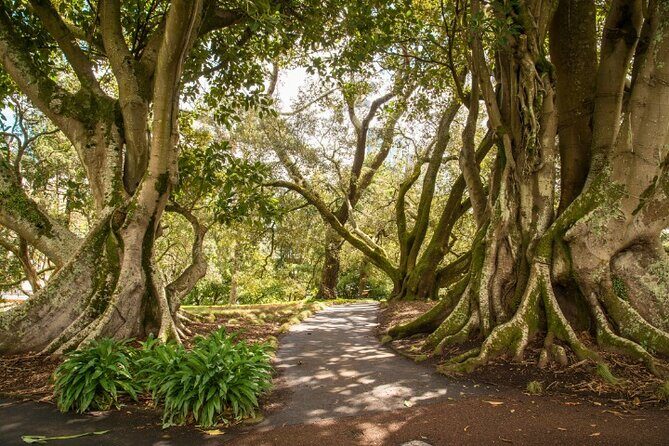
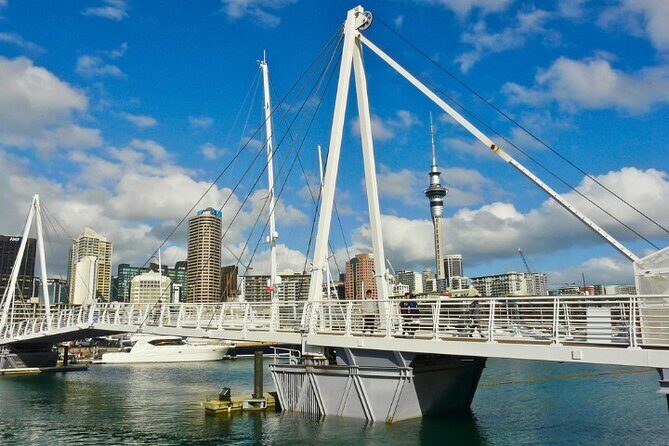
Stop 5 is the Wairau Creek Pedestrian Bridge, described as an engineering marvel linking Viaduct to Wynyard Quarter. The standout detail is that it’s a bascule drawbridge that lifts to let tall ships pass. Even if you don’t catch a lift, the design gives you that “this is still a working harbor” feeling.
Stop 6 is Wynyard Quarter, built on the idea of repurposing industrial leftovers. The tour frames it as former oil tanks and silos reborn as sustainable waterfront hubs, with creative spaces and eco-friendly buildings. It also mentions Silo Park events and family-friendly fountains, so it’s not only for adults with time on their hands.
This is a great segment if you care about how cities evolve. Auckland isn’t pretending the industrial past didn’t happen. It’s repackaging it for new uses—walkways, gathering spaces, and places that feel made for today’s pace.
Practical note: plan for harbor wind. Even on mild days, the waterfront can feel cooler than the city center blocks inland.
Albert Park and St. Patrick’s Cathedral: a green pause plus serious architecture
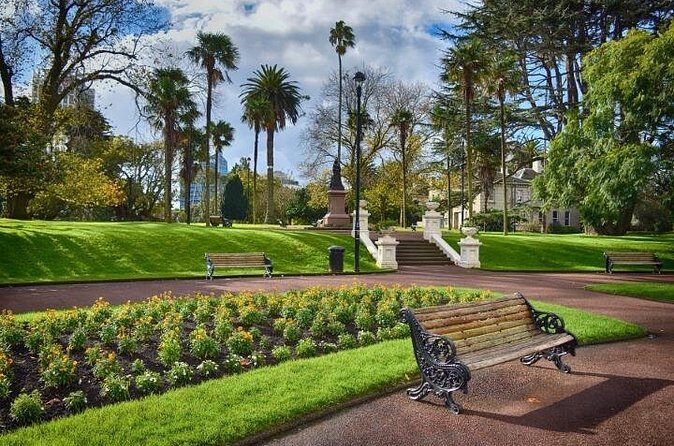
After the waterfront, you get a reset. Stop 7 is Victoria Park, described as Auckland’s giant green front lawn in the city center. It’s the kind of pause you’ll appreciate after 30–60 minutes of walking, especially if you like your sightseeing with a little breathing space. The tour notes heritage trees and the idea of urban escape steps from glass towers.
Stop 8 is St. Patrick’s Cathedral, and this is one of the longer stops at 15 minutes with admission included. The building is a Gothic Revival masterpiece from 1907, built in volcanic scoria stone. The details you’ll likely notice from the outside and inside (if you step in during your allotted time) include Roman bells, a London organ, and stained glass windows. The tour also calls it New Zealand’s most significant heritage building, which helps you understand why this stop is worth slowing down for.
If you’re the type who usually rushes churches, this one is different because the tour frames it with real context: it’s not just a pretty façade. It’s a heritage landmark.
You can also read our reviews of more guided tours in Auckland






Auckland Town Hall and the University Clock Tower: community, LGBTQ+ history, and a timepiece icon
Stop 10 is Auckland Town Hall, described here with a focus on progressive community meaning. It’s called progressive Gothic, and the key point is activism: championing LGBTQ+ rights since the 1970s. The tour mentions historic bells from 1862 and stunning stone vaulting. So yes, it’s architectural, but it’s also part of Auckland’s public story.
Stop 12 is University of Auckland Clock Tower, a neo-Gothic icon from 1926. The carving details are front and center: carved limestone with mythical creatures and native plants. It’s positioned as a symbol of knowledge where generations of graduates marked milestones, which gives the tower more weight than just being a landmark you pass by.
If you have a small window for photos, aim for the clock tower timing. It tends to be one of those “easy to frame” structures because the shape is so distinct.
Parnell Rose Gardens: the payoff ending at the city’s most romantic finish
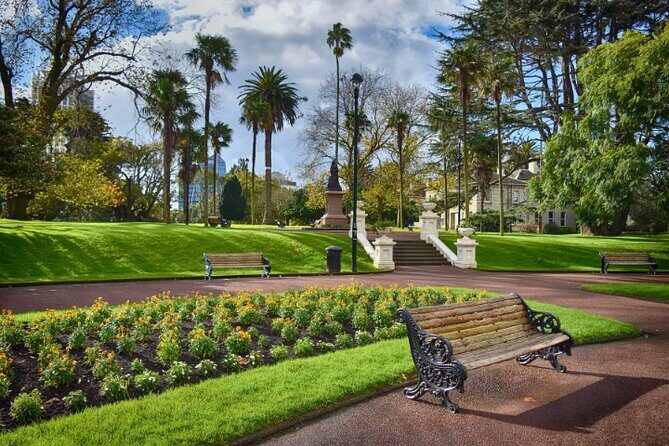
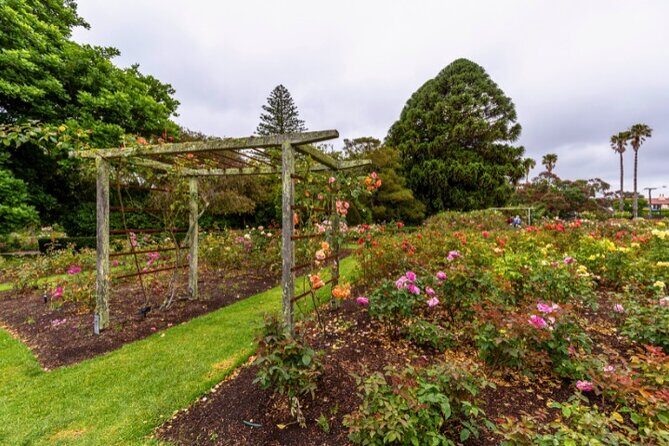
Stop 13 is where the route lands: Parnell Rose Gardens. The description here is specific—about 5,000 rose bushes cascading down the hillside. If you like gardens, this is the kind of ending that feels like a reward rather than an afterthought.
The tour also points to Dove-Myer Robinson Park, honoring the longest-serving mayor, and it labels the gardens as the city’s unofficial engagement corner. Even if you’re not there for romance, it’s still a great visual finale: slopes of color, harbor views, and a calm atmosphere compared to the busier waterfront nodes earlier.
This matters because the tour ends at the gardens, not back at Queen Street. So plan your transport with that in mind. If you know how you’ll get back from Parnell, the ending will feel smooth instead of stressful.
Timing tips so you don’t rush the good parts

This walk is built for about 4 to 5 hours, but your pace depends on what you choose to treat as “extra time.” The app’s style is short stop markers with one included inside visit, so you can either keep it efficient or stretch the walk by choosing two or three stops to do fully.
Here’s an easy way to handle it:
- Pick one landmark stop for deeper attention (St. Patrick’s Cathedral is the obvious choice).
- Pick one viewpoint stop for photos (Viaduct Harbour or the Wairau Creek Bridge area are strong contenders).
- Leave the rest as “see it, read it, move on.”
Also, keep your phone ready. You’ll be relying on the app to guide the sequence, and since this is self-guided, there’s no one to rescue you if you accidentally skip a step.
Price, tickets, and logistics that affect your day
The price is $9.99 per person, and that’s the headline. But the better question is what you get for it: a multi-stop route across central Auckland with mostly free stops, plus St. Patrick’s Cathedral admission included. That combination makes the price feel fair even if you end up spending only part of your time on the app’s suggested pacing.
The tour also uses a mobile ticket, and you’ll receive confirmation at booking. It’s private in the sense that only your group participates, which is ideal if you want flexibility without feeling squeezed into a crowd pace.
As for operating hours, it’s available daily from 9:00 AM to 8:00 PM. The tour itself has a defined start point and an end point at Parnell Rose Gardens, so you can plan around daylight or evening views depending on your mood.
Who should book this self-guided Auckland app walk
This is a great fit if:
- Guided tours are sold out and you still want an efficient city overview.
- You like walking but hate the pressure of a fixed group schedule.
- You want a tour that mixes famous icons with everyday Auckland spaces (parks, transport hubs, harbor redevelopment).
It may be less ideal if you want long, in-depth time at every stop. Many stops are intentionally brief, so you won’t get a lecturer-style experience. You’ll get a strong framework, and then you’ll be the one choosing where to linger.
Should you book this Auckland walking tour?
Book it if you want a smart, budget-friendly way to connect Auckland’s city center, harbor, parks, and Parnell without committing to a full-day guided program. The price-to-route ratio is strong, and the self-guided app approach makes it easy to take breaks without falling behind.
Skip it (or pair it with something else) if you’re hoping for lots of indoor time beyond St. Patrick’s Cathedral or you prefer tours where every stop gets a long, guided explanation. This one is made for moving, seeing, and choosing what to savor.
FAQ
Where does the Auckland City Self Guided Walking Tour start and end?
It starts at Dingwall Building, 87/93 Queen Street, Auckland Central, and ends at Parnell Rose Gardens in Parnell.
How long does the tour take?
The tour is scheduled for about 4 to 5 hours.
Is this tour self-guided or do I follow a live guide?
It’s self-guided using an app, and it’s private in the sense that only your group will participate.
What does the ticket cost?
The price is $9.99 per person.
Do I need to pay for admission at the stops?
Most stops are listed as free. St. Patrick’s Cathedral has admission included; the Sky Tower stop is also listed as free.
What time is the tour available?
The opening hours are Monday through Sunday from 9:00 AM to 8:00 PM.
Can I cancel for free?
Yes. Free cancellation is available up to 24 hours in advance for a full refund. If you cancel less than 24 hours before the start time, the amount paid is not refunded.