REVIEW · AUCKLAND
Auckland Dolphin and Whale Watching Eco-Safari Cruise
Book on Viator →Operated by Auckland Whale and Dolphin Safari · Bookable on Viator
Whales are wild; dolphins often aren’t. This 4.5-hour Hauraki Gulf eco-safari is built around real sightings plus marine research scientists who explain what you’re seeing as you cruise Auckland’s islands and marine park waters.
I especially like the boat setup—a custom-built 20-meter catamaran with comfortable places to watch—and the fact that your ticket supports marine mammal conservation.
Big caution: whale sightings can never be guaranteed, so you’re booking for a great chance, not a promise.
In This Review
- Key things to know before you go
- Starting From Viaduct Harbour, Right Where You Want To Be
- The Boat Experience: A 20-Meter Catamaran That’s Built for Watching
- What Wildlife You Can Realistically Expect in Hauraki Gulf
- Why the Science-Backed Commentary Changes the Feel of the Trip
- The Route: How Each Stop Builds the Day’s Story
- Deck Tactics and Photo Tips (So You Don’t Miss the Moment)
- Comfort, Weather, and That 4.5-Hour Time Block
- Price and Value: Is $135.91 Worth It?
- Who Should Book This Eco-Safari (and Who Should Think Twice)
- Should You Book This Tour?
- FAQ
- What animals can I hope to see on the Auckland Dolphin and Whale Watching Eco-Safari?
- How long is the cruise?
- Where do I meet for the tour?
- Is a marine mammal sighting guaranteed?
- What if I don’t see any marine mammals during the trip?
- Is food and drink included?
- What should I bring for the day on the water?
- What’s the check-in timing?
- How many people are on the cruise?
- What if the tour is canceled due to weather?
Key things to know before you go
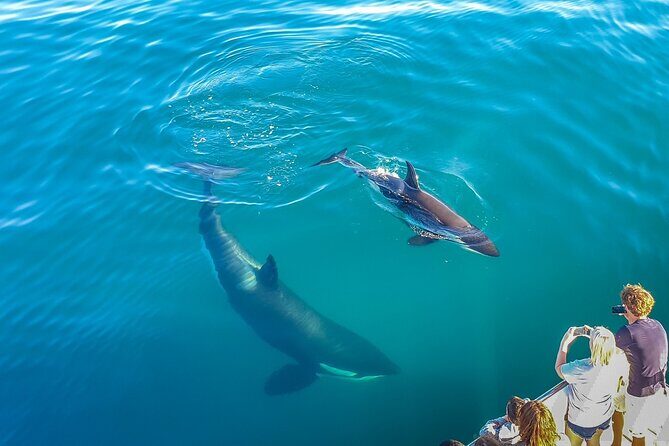
- Custom-built 20-meter catamaran: designed for viewing multiple whale types, plus dolphins and other wildlife.
- Marine research scientists onboard: expert commentary tied to what the crew is tracking in the gulf.
- A route that mixes big scenery with wildlife potential: you pass Auckland Harbour Bridge, Rangitoto Island, and more island areas.
- Wildlife viewing without bulldozing the animals: the crew works to keep interactions respectful and low-stress.
- Strong dolphin odds, even if whales don’t show: dolphins are commonly seen in these waters.
- If you don’t see marine mammals, you can go again: no extra charge is offered another day.
Starting From Viaduct Harbour, Right Where You Want To Be
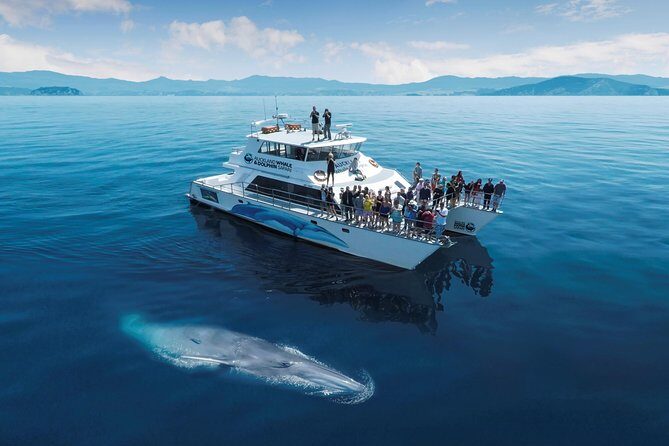
The tour starts at the New Zealand Maritime Museum area in Viaduct Harbour, which is prime downtown Auckland. You meet the crew near Eastern Viaduct, Auckland Central and then board for a 4.5-hour cruise through the Hauraki Gulf Marine Park. It’s a big plus if you don’t want a long hotel pickup run—there’s no hotel pickup or drop-off, so you can plan your day around this and stay flexible.
Two practical things matter. First, check-in closes 15 minutes before departure. If you drift in late, you risk losing your seat, so set a firm time. Second, bring your basics for comfort: warm layers and weatherproof gear, plus sunscreen and sunglasses. Auckland weather can change fast, and the wind off the water adds up.
If you’re arriving by public transport, you’re in luck—this departure point is near public transportation, and the whole experience is designed for people to roll in and go.
You can also read our reviews of more boat tours in Auckland

The Boat Experience: A 20-Meter Catamaran That’s Built for Watching
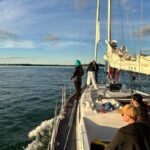
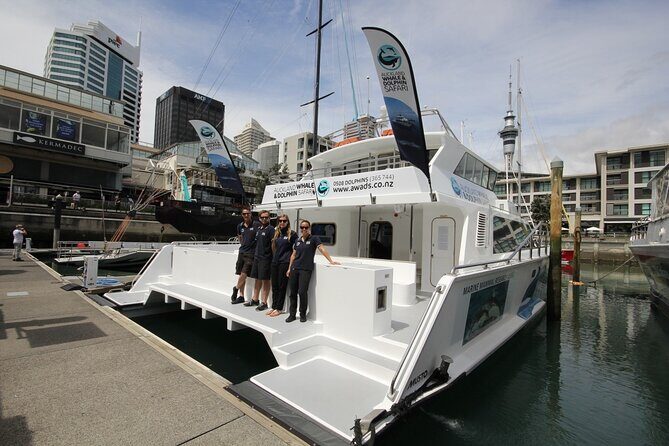
You’ll cruise on a custom-built 65-foot (20-meter) catamaran. The goal is simple: give you solid viewing angles while still keeping the ride comfortable. The catamaran is described as well-appointed for spotting up to six types of whales, plus dolphins and other marine life.
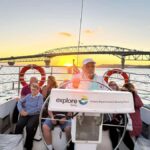
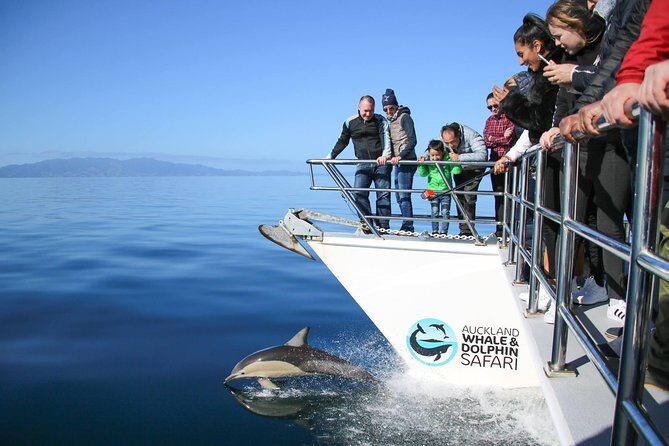
Where you stand or sit matters. One theme that shows up in real-world feedback: people love being positioned so dolphins can come close, and the crew tries to guide the boat for the best viewing when animals appear. There’s also a note from experience: the front deck can be the best spot when underway, but it’s also the place where you’ll feel movement more—so if you’re sensitive to motion, choose your spot wisely and keep your footing stable.
Plan to spend time outside for wildlife spotting, but you’ll also likely want the option to shelter as conditions shift. With a maximum of 99 travelers, it’s not a tiny private boat, but it’s also not a massive cattle ship. On busy days, you’ll still want to be patient when people rotate for photos.
What Wildlife You Can Realistically Expect in Hauraki Gulf
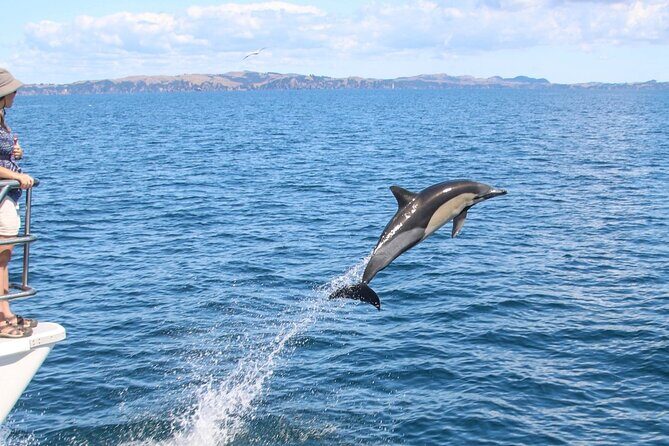
This is the part everyone books for: whales, dolphins, seals, and seabirds. The good news is that dolphins are often around in these waters, and the crew actively looks for marine mammals during the trip.
Here’s what the safari is set up to spot:
- Bottlenose dolphins in frequently seen pods
- Bryde’s whales (native to New Zealand)
- Seals
- Blue penguins (so bring your camera ready)
- Seabirds like Australasian gannets, petrels, shearwaters, and white-fronted terns
You should also understand the wildlife reality. The tour itself is upfront that viewings can’t be guaranteed, even though whales and dolphins are often swimming around these waters. On some trips, the boat finds whales; on others, it’s a dolphin-heavy outing with birds and penguins instead. That uncertainty is part of the deal with wild animals.
And there’s a fair safety net: if you don’t see any marine mammals during your cruise, you can go again another day at no extra charge. That takes some of the sting out of the whale-luck factor.
Why the Science-Backed Commentary Changes the Feel of the Trip
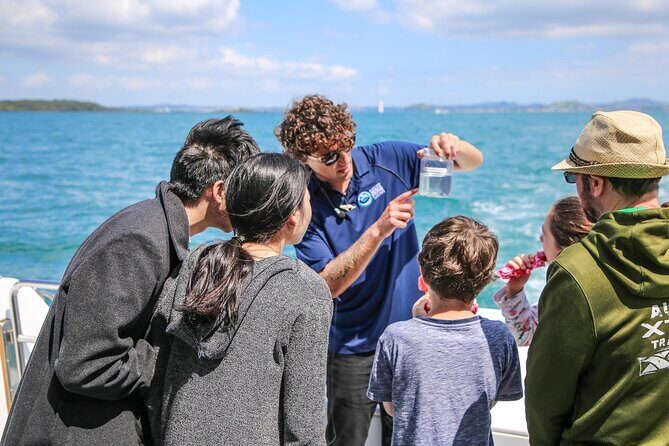
A plain whale cruise is fun. This one adds a layer that makes it more memorable: expert commentary from onboard marine research scientists. Instead of generic narration, you get explanation tied to how the crew and researchers work in partnership with local scientists.
You’ll hear about:
- the Hauraki Gulf Marine Park and why it’s considered highly biologically diverse
- the idea of marine preserves within the gulf
- what whales the crew tracks and how that affects where they steer during the safari
- facts about the birds you spot and why certain species show up in certain conditions
This matters because it turns your role from spectator to informed observer. You’re not just waiting for a spout in the distance—you’re learning what you should be scanning for and why the crew reacts quickly when something surfaces.
Even better, the boat staff are focused on managing wildlife respectfully. You’ll still get your moments for photos and video, but the approach is about letting animals choose how close they want to be.
The Route: How Each Stop Builds the Day’s Story
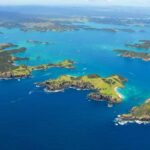
Even though it’s one continuous cruise, the route is part of the experience. You’ll move through several notable areas, with scenery that frames the wildlife sightings.
What the stops feel like, in practical terms:
- New Zealand Maritime Museum (Start): you check in and get oriented before the water time begins.
- Viaduct Harbour: the launching point—downtown Auckland at your back.
- Auckland Harbour Bridge: a major visual landmark that signals you’re leaving the city edge behind.
- Rangitoto Island: a dramatic volcanic island that gives the cruise its classic Auckland look and often makes you feel like you’re in open water even when you’re not far from shore.
- Waitemata Harbour and Hauraki Gulf: the shift from “harbor views” to more true marine park cruising. This is where your scanning for wildlife really kicks in.
- Motuihe Island and Motutapu Island: island areas that add habitat variety and scenic variety to the viewing.
- Tiritiri Matangi Island: another island stop that’s great for bird watching context (even when birds are the main show).
- North Head Historic Reserve: adds a final sweep of coastal outlook as you head back toward Auckland.
A small drawback to keep in mind: since wildlife is unpredictable, the route is designed to maximize chances rather than guarantee specific sightings at specific times. That’s why the crew keeps watch and adjusts during the cruise.



Deck Tactics and Photo Tips (So You Don’t Miss the Moment)
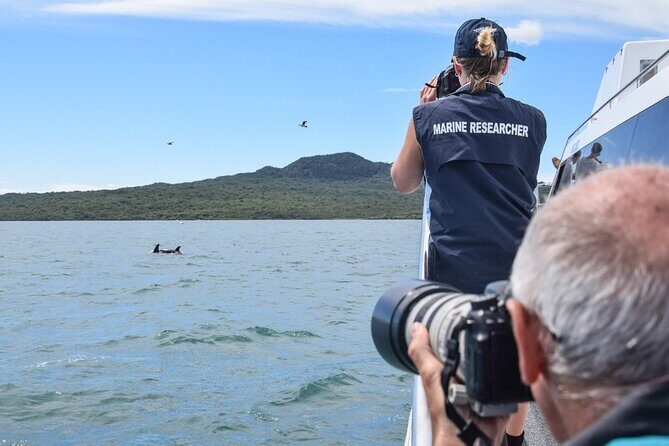
If you’re chasing whales and dolphins with a camera, you’ll enjoy this cruise more with a few small choices.
First, bring binoculars. You don’t need them for dolphins that come close, but they help when seabirds are high and fast or when you spot surf lines at distance.
Second, use a simple plan for photo space:
- pick a viewing spot you can share without blocking others
- rotate when staff suggest it so everyone gets a turn at the best angle
- keep your feet steady—especially if you’re near the front during underway movement
Third, don’t count on indoor audio to do all the work. When commentary is hard to hear (wind, crowd noise, distance from the speaker), the fix is straightforward: move closer to where sound is clearer or step in/out as needed so you don’t miss key info.
Finally, protect your skin. One repeated travel-life lesson here: people forget how strong sun and wind combine at sea. Sunscreen and a hat with a chin strap are your best friends.
Comfort, Weather, and That 4.5-Hour Time Block
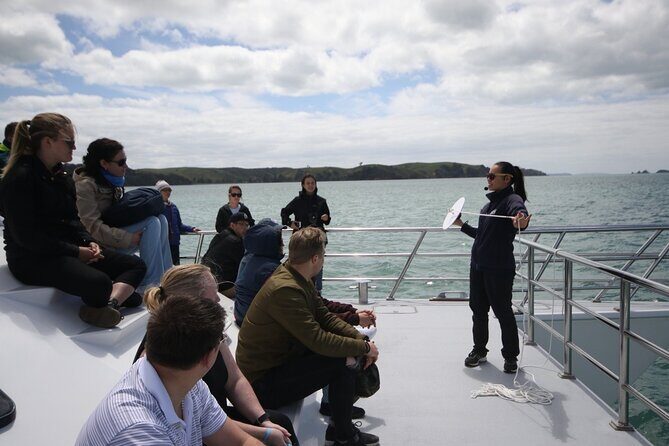
It’s a 4.5-hour cruise, so it’s long enough to settle in but not so long that you’ll feel drained. Still, weather can be the deciding factor for comfort. You’ll be on the water, and layers + weatherproof gear are the difference between enjoying the day and constantly wishing you’d dressed better.
Also, sea conditions can vary. There’s at least some evidence from real outings that some scheduled sailings can feel choppy or rough, even when you’re properly warned. The captain’s job includes steering to reduce stress on wildlife and passengers, and many people appreciate when that care shows.
On the boat, food and drinks aren’t included, but you can buy snacks and drinks onboard. That’s handy because you don’t have to race to eat before the cruise. Bathrooms are also available onboard (so you can stop worrying mid-ride).
Price and Value: Is $135.91 Worth It?
At $135.91 per person, you’re paying for more than a basic sightseeing ride. You’re getting:
- a guided eco-safari experience focused on marine mammals and seabirds
- marine research scientists delivering commentary tied to real wildlife tracking
- a route designed to maximize chances inside the Hauraki Gulf Marine Park
- a ticket that contributes directly to marine mammal conservation
That conservation piece is real value. It helps justify the cost if you care about where your money goes. And the no-marine-mammals scenario voucher (another day at no extra charge) is also a meaningful risk reducer for a whale-focused outing.
What’s not included is food and drinks, so budget a little extra if you want snacks on board. But compared with other experiences that are mostly about a single highlight, the mix of wildlife spotting + science + scenery makes this feel like a full half-day you’ll actually remember.
Who Should Book This Eco-Safari (and Who Should Think Twice)
This tour fits best if you want:
- wildlife viewing with a science-forward explanation
- a downtown Auckland departure (easy logistics, no long transfer)
- a high chance of dolphins, and a genuine shot at whales
- respectful animal viewing with guidance for best viewing positions
It also works for many groups because most travelers can participate and service animals are allowed. If you’re traveling with family, the combination of dolphins and penguins makes it likely someone will have a big smile moment.
Think twice if whale certainty is your main goal. Even with expert effort, whales can be elusive. You’re booking for a strong chance, not a guarantee—and you’ll still come away with dolphins and seabirds if the day runs that way.
Should You Book This Tour?
Yes, if you want a half-day in Auckland that blends real wildlife watching with marine research science and a conservation payout you can feel good about. It’s especially worth it if you’re excited about dolphins, birds, and the idea of learning as you watch.
Book it with eyes open about one thing: whales aren’t guaranteed. If you’re okay with the wild-animal uncertainty—and you dress for wind and weather—you’ll get a lot out of this cruise, even on a day that’s more dolphin-and-bird focused than whale-focused.
FAQ
What animals can I hope to see on the Auckland Dolphin and Whale Watching Eco-Safari?
The tour is designed to look for whales, dolphins, seals, and rare seabirds, with chances to spot bottlenose dolphins, Bryde’s whales, blue penguins, and seabirds such as Australasian gannets, petrels, shearwaters, and white-fronted terns.
How long is the cruise?
The eco-safari lasts about 4 hours 30 minutes.
Where do I meet for the tour?
You meet at the Eastern Viaduct area in downtown Auckland near the New Zealand Maritime Museum.
Is a marine mammal sighting guaranteed?
No. Wildlife viewings can’t be guaranteed, but dolphins and whales are often swimming around these waters.
What if I don’t see any marine mammals during the trip?
If you don’t see any marine mammals during your cruise, you can go again another day at no extra charge.
Is food and drink included?
No. Food and drinks are not included, but you can purchase them onboard.
What should I bring for the day on the water?
Bring warm layers and weatherproof gear, plus a sun hat (with chin strap), sunscreen, sunglasses, a camera, binoculars, and flat-soled shoes.
What’s the check-in timing?
Check-in closes 15 minutes before the stated departure time. If you’re late, you risk losing your allocated seats.
How many people are on the cruise?
The tour/activity has a maximum of 99 travelers.
What if the tour is canceled due to weather?
This experience requires good weather. If it’s canceled due to poor weather, you’ll be offered a different date or a full refund.