REVIEW · AUCKLAND
Auckland North Shore Glowworm Tour
Book on GetYourGuide →Operated by Social Nature Movement · Bookable on GetYourGuide
A forest that lights up when you blink. This Auckland North Shore glowworm tour in Awaruku Reserve is built around seeing Arachnocampa luminosa in their natural habitat, with a guide who explains what you’re actually looking at as the night comes alive.
I love two things most: the chance to get close to the glowworms without the usual barriers, and the small-group feel (limited to 10) that makes it easier to ask questions while you’re standing in the dark. You’ll also get a sense of place, from kauri and nikau palms to the broader conservation work happening in the reserve.
One thing to consider: it’s a nighttime walk, so you’ll want comfortable walking shoes and to be okay with uneven, forest-trail footing after dark.
In This Review
- Quick hits
- Entering Awaruku Reserve after dusk
- The guided walk: what you actually see at night
- Close-up Arachnocampa luminosa: the glowworm lifecycle in plain language
- Learning beyond the lights: native birds and conservation work
- Timeline reality check: 45 minutes vs a longer guided segment
- Photo tips that actually help in forest darkness
- What to expect from the guide: names to know
- Bioluminescence add-ons: seeing living light beyond glowworms
- Comfort checklist: shoes, camera, and night behavior
- Who this Auckland glowworm tour suits best
- Should you book the Auckland North Shore Glowworm Tour?
- FAQ
- Where is the meeting point for the Auckland North Shore glowworm tour?
- How long is the tour?
- What language is the tour guide?
- Is this a small-group tour?
- What should I wear and bring?
- Can I cancel for a full refund?
Quick hits
- Awaruku Reserve native forest: over 12 hectares of bush with iconic trees like kauri and nikau palms
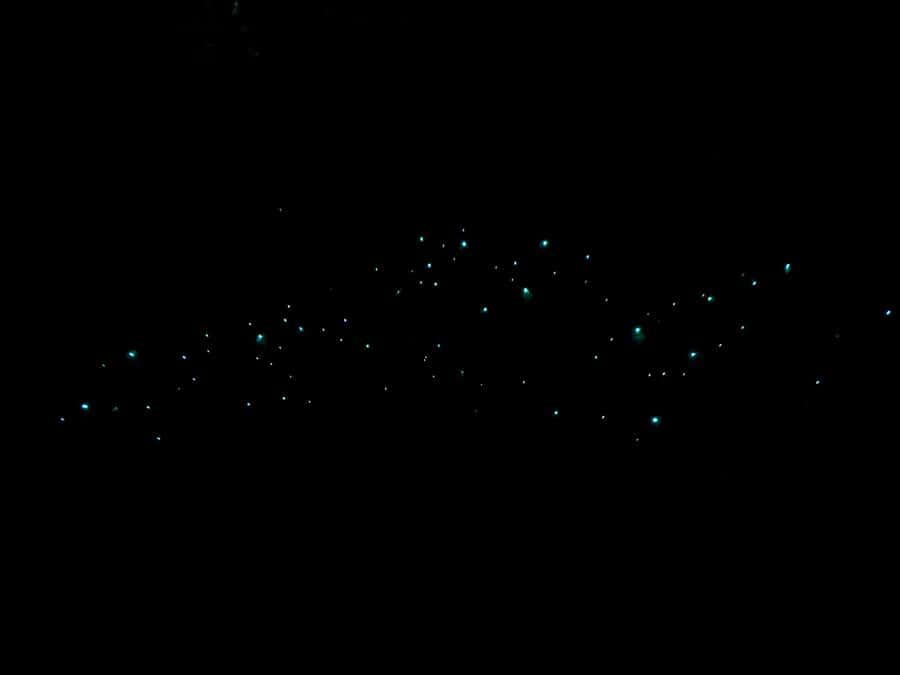
- Glowworms in the wild: you’ll see Arachnocampa luminosa where they live, without viewing barriers
- Photo-friendly moments: you’re encouraged to bring a camera for shots of both glowworms and surrounding nature
- Guide-led glowworm lifecycle talk: you’ll learn how silk threads and light help them catch prey
- Conservation focus: restoration work that supports native birds like kākā and kererū
- Bioluminescence may happen: on some evenings, the experience can include coastal bioluminescence if conditions allow
Entering Awaruku Reserve after dusk
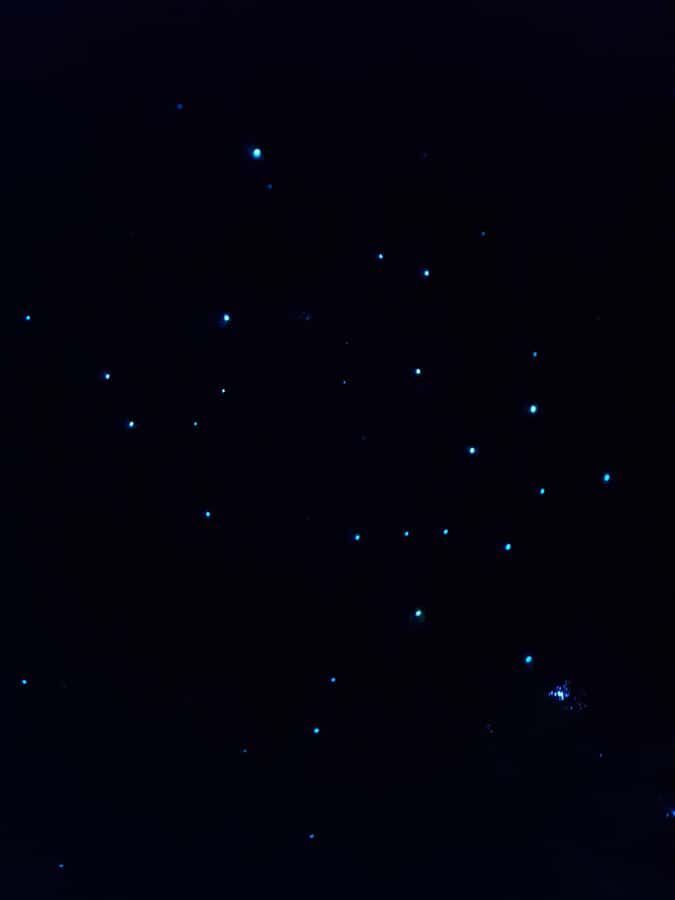
The meeting point is easy to find: outside Hairluxx Boutique in Torbay (coordinates: -36.698219299316406, 174.73330688476562). When you meet your guide there, the tour starts with a quick welcome and a short safety briefing so you know how the walk will work once you’re deeper in the dark.
Then you head into Awaruku Reserve, a native forest area described as over 12 hectares. This matters, because the glowworm experience isn’t just about spotting lights. It’s about seeing the glowworms as part of a functioning ecosystem, with the trees, shadows, and sounds of night all around you.
As dusk settles, your guide points out the forest features you’d normally miss in daytime. Expect stops or slower moments to talk about kauri trees, nikau palms, and the ecological and cultural importance of the area, including its connection to ancient Māori settlements. Even if you’re just passing through Auckland, this is one of those chances to slow down and notice the living stuff, not just the tourist version of it.
You can also read our reviews of more tours and experiences in Auckland.

The guided walk: what you actually see at night
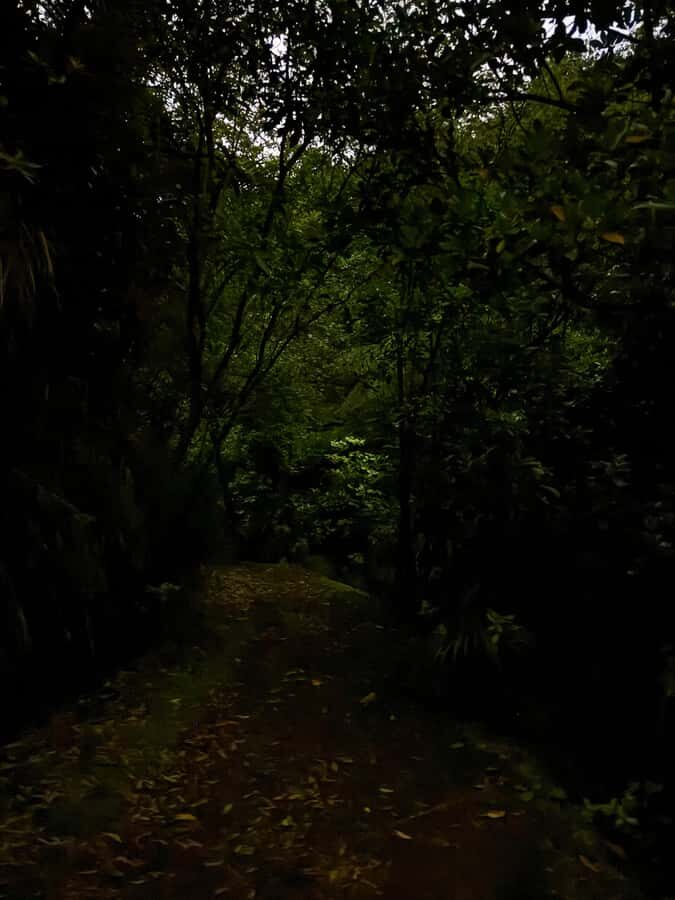
A good glowworm tour is judged by what happens when you stop. Here, you’ll move along the trails at a relaxed pace, with the guide shaping the evening around what to watch for as conditions get darker.
A big part of why this feels different from the more common “dark room” glowworm experiences is that you’re walking in real bush. The tour is designed to get you to a secluded spot known for glowworm displays as the forest quiets down.
That quiet is part of the effect. When you’re in a native forest at night, your brain starts listening as much as it sees. Your guide uses that moment to transition from general forest storytelling to glowworms specifically, so when the glow starts, it lands as an actual discovery rather than a quick check-the-box photo moment.
Close-up Arachnocampa luminosa: the glowworm lifecycle in plain language
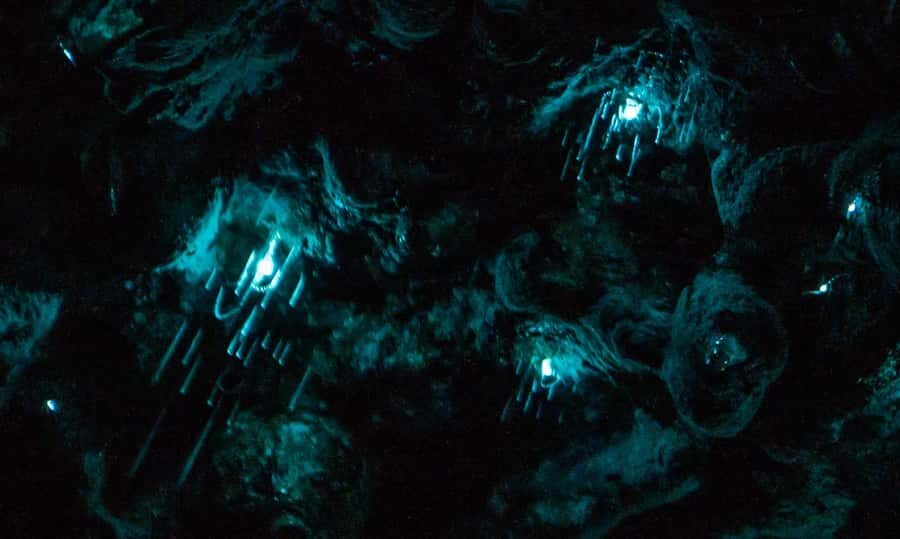
The star of the show is Arachnocampa luminosa, New Zealand’s famous glowworm species. Your guide explains what they are and what makes them glow, which makes the whole night feel smarter and more intentional.
Here’s the core idea you’ll learn: these “glowworms” are actually larvae, and the light you see is part of how they feed. Your guide walks you through their lifecycle and explains their hunting strategy: they use silk threads and their light to help catch prey. Once you understand that, the lights in the trees don’t feel random. They feel like a living system doing its job.
The tour also aims for a viewpoint that keeps you in the natural scene. One of the highlights is seeing the glowworms in their natural habitat without barriers. That matters for two reasons:
- Your photos look more like a forest at night, not like a fenced exhibit.
- Your eyes can adjust to the glow. The glow becomes the guide, not the glass or rail.
Small-group size helps too. Limited to 10 participants, you’re less likely to get stuck behind a wall of shoulders when the glowworm lights turn on in clusters.
Learning beyond the lights: native birds and conservation work
After the glowworm viewing, the tour includes a short walk tied to conservation efforts. This is the part I appreciate most, because it gives your glowworm sighting context. You’re not leaving with just spooky-cute nature lights. You’re leaving with a clearer idea of what’s being protected and why.
Your guide shares how Awaruku Reserve supports native species such as kākā and kererū, and you’ll learn about the restoration work happening to help these birds survive. Even if you’re not a “conservation person,” this piece lands because it connects the night spectacle to real-world effort. The glowworms exist in a network of habitat, and that network depends on ongoing protection.
This is also where the Māori settlement context ties in. The guide’s explanation helps you see the forest as a place with meaning beyond the current visitor experience.
If you like nature walks where you actually come away knowing something, this tour has that covered without turning into a lecture.
Timeline reality check: 45 minutes vs a longer guided segment
One thing you should watch for when planning is the timing. The experience is advertised as 45 minutes, but the Awaruku Reserve guided portion is also listed as 105 minutes.
That sounds like a mismatch, but the practical takeaway for you is simple: check your exact confirmation for the real start-to-finish schedule. In any case, you’re doing a nighttime walk on trails, not sprinting from one photo stop to another. Plan for time on your feet, plus a bit of waiting around while the guide sets the group in the right viewing spots.



Photo tips that actually help in forest darkness
You’ll want a camera for photos, and your guide’s explanations help you take better shots, not just more shots. In a forest at night, the challenge isn’t only darkness. It’s that you’re mixing tiny glowing subjects with darker surroundings.
Here are practical things that work well in this kind of scene:
- Take a few wider shots first, so you capture glowworms with the surrounding nature, not just as random dots.
- Then switch to closer framing once your eyes adjust to the light.
- Keep your camera steady. If you’re handholding, take your time with each shot.
- Expect the best glowworm “reads” when you’re calm and still. If the group is moving, the lights will feel less clear in photos.
If you’re the type who enjoys learning the why behind a shot, the lifecycle talk is also useful. Knowing these larvae are part of a feeding system can help you position yourself in a way that makes sense in the scene.
What to expect from the guide: names to know
The guides here are a big deal. In past groups, guides such as Legend and Chris have been singled out for how they explain glowworms and their environment, and for answering questions as you walk. That’s not just pleasant. It changes the tour from passive viewing to real understanding.
If you’re curious and you like asking questions, the small-group format makes those questions actually happen. You’re not stuck whispering while someone else blocks your view.
Bioluminescence add-ons: seeing living light beyond glowworms
Sometimes the night goes beyond glowworms. On some evenings, the experience offers opportunities to see bioluminescence in coastal areas—where natural organisms can create glowing water or light effects along the shoreline.
Your guide also frames this with a bit of science: bioluminescence is the natural process where living organisms produce light. In this context, it can include forest glowworms and marine bioluminescent organisms (including the microscopic dinoflagellates responsible for glowing water). Conditions matter, so you can’t treat this like a guarantee.
Even with that uncertainty, I think this add-on is worth having because it broadens the idea of “New Zealand’s living nightscape.” You see the same theme—living light—showing up in different habitats.
Comfort checklist: shoes, camera, and night behavior
This tour gives you a simple prep list, and it’s the right one:
- Wear comfortable walking shoes for uneven trails in the dark.
- Bring a camera if you want photos of glowworms and the surrounding forest.
That’s it. No long gear list. No complicated rules. But one extra practical tip from experience in nighttime nature tours: keep your hands free. If your phone is your only flashlight, make sure you can still hold your camera steady.
And once the group settles into glowworm viewing mode, do the quiet thing. The best photos and the clearest viewing usually happen when people aren’t constantly shifting position.
Who this Auckland glowworm tour suits best
This is a great fit if:
- You want glowworms on the Auckland North Shore without having to plan a longer road trip.
- You like guided nature walks where the explanation makes the experience more meaningful.
- You prefer smaller groups (max 10) so you can see and ask questions.
- You want a mix of night spectacle plus conservation context.
It may not be your best choice if you’re expecting a huge, high-energy attraction. This is calmer by design: walking trails, soft glow, and time to look.
Should you book the Auckland North Shore Glowworm Tour?
Yes, if you want a real forest glowworm experience close to Auckland, with a guide who talks through what you’re seeing and why it matters. The strongest reasons to book are the close-up viewing without barriers, the small group size, and the fact that you’re not only looking at lights—you’re learning about the ecosystem, including kākā and kererū conservation.
I’d think twice if you’re only interested in a guaranteed photo moment and nothing else. The glowworms are natural and conditions play a role, and the possible bioluminescence coastal add-on is also dependent on the night. But if you’re flexible and you’re okay with an evening that rewards attention, this tour is the kind that leaves you calmer than you expected.
FAQ
Where is the meeting point for the Auckland North Shore glowworm tour?
You meet outside Hairluxx Boutique Torbay to begin the journey. The provided coordinates are -36.698219299316406, 174.73330688476562.
How long is the tour?
The experience is listed as 45 minutes, and the Awaruku Reserve guided tour segment is also listed as 105 minutes. Check your exact booking confirmation for the timing on your departure date.
What language is the tour guide?
The tour includes a live guide in English.
Is this a small-group tour?
Yes. It’s limited to a small group of up to 10 participants.
What should I wear and bring?
Wear comfortable walking shoes. Bring a camera if you want to take photos.
Can I cancel for a full refund?
Yes. Free cancellation is offered up to 24 hours in advance for a full refund.