REVIEW · AUCKLAND
Auckland : Rotorua Living Maori Village with Haka and Hangi Lunch
Book on Viator →Operated by Expedigo Tours and Travels Auckland · Bookable on Viator
Steam, chants, and lunch power the day. This Auckland-to-Rotorua tour pairs a guided look at Whakarewarewa Living Māori Village with the punchy cultural performance of a haka and a traditional geothermal hāngī meal. I love that the day is built around real, living community life, not a quick photo stop.
One thing to plan for: it’s a long day. You start at 6:00 am, and the total time runs about 11 to 12 hours, with a hefty chunk of driving each way.
In This Review
- Key highlights before you go
- Auckland pickup at 6:00 am: the long-day rhythm
- Whakarewarewa Living Māori Village: geothermal sights with human context
- Watching the haka and why the performance is timed right
- Hāngī lunch and dessert: what to eat and how it fits the story
- Rotorua highlights by car: what you see in just 30 minutes
- Group size, guide style, and comfort on an 11–12 hour day
- Price and value: what $232.71 buys you in real time
- Who this tour suits best (and who might want a different plan)
- Should you book this Auckland to Rotorua Māori Village day trip?
- FAQ
- What is the duration of this tour?
- Where does the tour operate?
- What time does the tour start?
- Is pickup offered?
- How big is the group?
- What’s included in the price?
- Is admission included for the Māori village?
- What cultural experiences are part of the visit?
- What meals are included or not included?
- Is there free cancellation?
Key highlights before you go
- Living Māori Village tour with local guidance focused on how life works around geothermal forces
- Geothermal sights you walk past, including bubbling mud pools, steaming vents, and spouting geysers
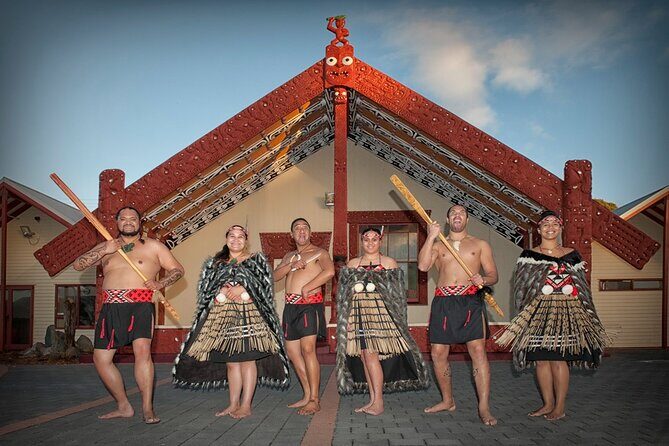
- Haka and cultural performance as a central moment of the visit
- Hāngī lunch and dessert cooked using natural steam
- Rotorua highlights by car: Government Gardens, Lake Rotorua, Sulphur Point, and Rotorua Museum
- Small group size (max 11) plus an air-conditioned vehicle and bottled water
Auckland pickup at 6:00 am: the long-day rhythm

Your day begins early, with a stated start time of 6:00 am and pick-up available from Auckland Central. That early departure matters because Rotorua is a solid drive away, and the schedule is designed so you still get a meaningful village visit plus a quick tour of Rotorua afterward.
Expect the pace to be “organized and moving,” not slow travel. The plan includes a long travel block from Auckland to Rotorua, then roughly 4 hours at Whakarewarewa, then a short driving loop around town before heading back. If you hate early starts, this is the main trade-off.
On the plus side, you’re not stuck guessing logistics. The tour provides an air-conditioned vehicle, bottled water, snacks, and a guide to keep things flowing. The small group limit of 11 travelers also tends to make the day feel more personal than big-bus sightseeing.
You can also read our reviews of more tours and experiences in Auckland

Whakarewarewa Living Māori Village: geothermal sights with human context
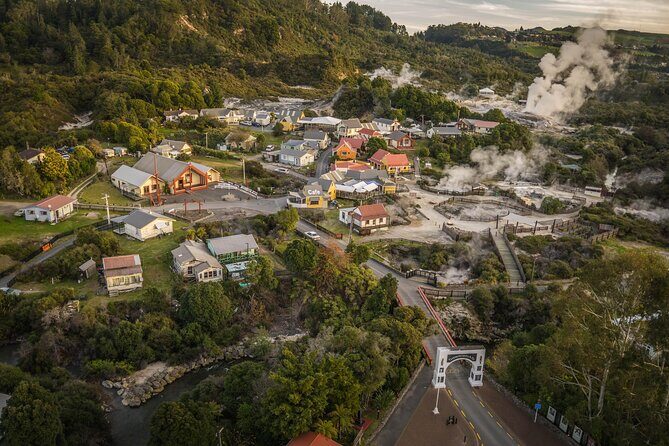
Whakarewarewa is the heart of the day. You’ll arrive at the Living Māori Village and join a guided experience led by local people from Tūhourangi Ngāti Wāhiao. That matters because this isn’t framed as a distant museum. It’s presented as a community living in harmony with geothermal activity beneath their feet.
The village visit includes time to stroll along trails where you can see active geothermal features up close: bubbling mud pools, steaming vents, and spouting geysers. These aren’t just scenery. In this setting, they’re treated as part of daily life and part of Māori history and mythology, according to the tour’s own focus.
Why this works well: geothermal areas can turn into either one of two things—either you only get science facts, or you only get performance. Here, you get both angles: physical activity you can see and cultural meaning tied to it. You also get a guided route rather than wandering on your own, which helps you understand what you’re seeing.
What to consider: this portion runs about 4 hours, and it’s outdoors. Even if you’re not doing heavy walking, you’ll still be moving through uneven terrain and around steam. Wear shoes that handle wet ground and consider a light layer because geothermal sites can change temperature quickly.
Watching the haka and why the performance is timed right
After the geothermal walk and village tour, the day turns toward culture in a more dramatic way: you’ll experience a haka and a cultural performance. The tour description places this as a key part of the experience, not a quick add-on.
This is one of the moments where timing helps. After you’ve seen the geothermal features and learned the setting, the performance lands with more meaning. In other words, you’re not just watching choreography—you’ve already had the context of place and community.
A practical note: a performance can feel intense if you’re tired from early pickup and long travel. If you tend to get cranky on long days, keep yourself steady with the snacks provided and sip water. It’s easier to enjoy when your energy is up.
Hāngī lunch and dessert: what to eat and how it fits the story
One of the biggest draws is the traditional hāngī meal cooked with natural steam, followed by dessert. This is the part that often makes people remember the day, because it connects the geothermal theme to something you can taste.
If you’re wondering how filling it will be: you’re not just given something symbolic. The description clearly calls out a full hāngī meal and then dessert. That’s why the day doesn’t feel like “culture first, then maybe food if you’re lucky.”
Still, check your expectations on the broader meals of the day. The tour notes breakfast and dinner are not included, and lunch details can vary depending on how your booking is labeled. The good news is the program itself includes hāngī and dessert, so you should plan around that as your main midday meal.
When it’s served in the schedule matters too. You arrive, tour and walk, take in the performance, then eat. That order is smart: you’ve already been outside and learning, so you’re ready to settle into food and conversation.
Rotorua highlights by car: what you see in just 30 minutes
After Whakarewarewa, you get a guided driving tour of Rotorua’s key sights, including Government Gardens, Lake Rotorua, Sulphur Point, and the Rotorua Museum. The time listed for this stop is short—about 30 minutes—so this is best viewed as a sampler.
Here’s the value of doing it this way: you leave the geothermal village and you immediately get a broader sense of what Rotorua looks like as a town. You also get orientation. Even if you don’t have time to go deep on each site, you’ll know what you want to revisit later (if you stay longer in Rotorua).
The drawback is obvious: you won’t have time for slow photo walks or long museum time. If you love museums, you’ll likely wish you had more hours at the Rotorua Museum. If you mainly want highlights and an efficient day trip from Auckland, the quick drive is exactly what keeps the schedule workable.
If you’re sensitive to sightseeing “whiplash,” focus on one or two moments you care about. For instance, prioritize where you want to spend extra time if you ever come back: lake views, gardens, or the museum.



Group size, guide style, and comfort on an 11–12 hour day
The tour runs with a maximum of 11 travelers, which is a real quality factor on a day like this. Smaller groups usually mean more questions, easier listening during performances, and less time waiting around.
The vehicle is air-conditioned, and the day includes bottled water and snacks. That matters because you’re leaving early, moving for hours, and spending time outdoors at the village. Even if you’re not starving, those snacks help you stay comfortable until the hāngī meal.
The guide is also included, and the experience is built around local insight. Past visitors have praised guides who are tied closely to the village itself—people who live and breathe the heritage they’re sharing. You’ll get the best version of this day when you treat the guide as part of the show: ask simple questions like how geothermal forces shape daily life, or what to look for while you walk the trails.
Price and value: what $232.71 buys you in real time
At $232.71 per person, this isn’t a budget throw-it-together day. The value comes from bundling several things that individually cost time and money: a long-distance transfer from Auckland, a guided Whakarewarewa visit (with admission included), cultural performance, and an on-program hāngī lunch plus dessert.
You’re also paying for the structure. A day trip like this can fall apart when you self-plan: transport timing, entry timing, and knowing what to watch for. Here, the tour handles those pieces, and the itinerary is designed around the village’s long visit time (about 4 hours) so you don’t rush through it.
Is it worth it? For most people who want a guided, culturally respectful introduction to Rotorua’s geothermal setting in one day, yes. If your dream Rotorua trip is all about long independent exploration—museums for hours, multiple hikes, no fixed times—then this format may feel too scheduled.
Who this tour suits best (and who might want a different plan)
This tour fits you best if you want:
- A guided introduction to Rotorua’s geothermal world tied to Māori community life
- The combo of geothermal trails + haka + hāngī in one day
- A small-group day with pickup from Auckland Central and comfort on the drive
You might want to choose something else if:
- You dislike early mornings and want a relaxed start
- You prefer independent sightseeing over a fixed program
- You’re hoping for lots of time at the Rotorua Museum or a long stop at each viewpoint
Should you book this Auckland to Rotorua Māori Village day trip?
I’d book it if you’re the type of traveler who likes one strong, well-led anchor experience. The day is built around Whakarewarewa, and that sets the tone for everything after—especially the haka and the hāngī meal. The Rotorua driving loop then gives you just enough context to know what else is worth a return trip.
Before you decide, be honest about two things: the 6:00 am start and the 11 to 12 hour commitment. If you can handle a long day, you’ll likely appreciate the efficiency and the way the tour connects geothermal activity to lived Māori culture. If you can’t, you may enjoy Rotorua more with a longer stay and slower pacing.
FAQ
What is the duration of this tour?
The tour runs about 11 to 12 hours.
Where does the tour operate?
It’s an Auckland to Rotorua day trip, with pickup from Auckland Central and a return to Auckland Central.
What time does the tour start?
The start time is 6:00 am.
Is pickup offered?
Yes, pickup is offered.
How big is the group?
The tour has a maximum of 11 travelers.
What’s included in the price?
The tour includes an air-conditioned vehicle, all fees and taxes, bottled water, snacks, and a guide.
Is admission included for the Māori village?
Yes, admission to Whakarewarewa – The Living Māori Village is included.
What cultural experiences are part of the visit?
You’ll experience a haka and a cultural performance, along with a guided tour of village life and geothermal areas.
What meals are included or not included?
Breakfast, dinner, and lunch are listed as not included. The program includes a traditional hāngī meal and dessert as part of the village experience.
Is there free cancellation?
Yes. You can cancel for a full refund up to 24 hours before the experience start time.