REVIEW · AUCKLAND
Auckland: Rotorua Tour with Mitai Māori Village & Wai-O-Tapu
Book on GetYourGuide →Operated by ExperienceKart · Bookable on GetYourGuide
A day trip to Rotorua can feel long, but not like this. You get Māori culture at Mitai Māori Village plus the theater of a warrior canoe and then you’re walking among Wai-O-Tapu’s steaming colors, including the world-famous Champagne Pool.
I especially liked the real structure of the experience: a proper hangi lunch cooked in an earth oven, followed by performances that explain meaning, not just movement. You’ll also love the photo moments at Wai-O-Tapu, where hot and cold springs sit side by side with bubbling mud and steam. The main thing to consider is that this is a full 13-hour day with walking on uneven, unpaved ground—sturdy shoes are not optional.
If you’re even slightly curious about how people connect food, ceremony, and landscape in Rotorua, this tour hits a sweet spot. You’ll get a clear, guided cultural program at Mitai and then free time to take in Wai-O-Tapu at your own pace. Just know it’s not wheelchair-friendly, and dietary requests are limited (for example, vegan options may not be available).
In This Review
- Key Moments You Shouldn’t Miss
- A 13-Hour Auckland to Rotorua Day: What the Schedule Really Means
- Mitai Māori Village: The Hāngi Feast and Traditional Welcome Setup
- Warrior Canoe Display on Wai-o-Whiro: A Moment of Real Intensity
- Wai-O-Tapu Thermal Wonderland: Champagne Pool and the World’s Most Colorful Footpath
- Photo Strategy for Champagne Pool and the Mud-and-Steam Stops
- Getting Value for $283: What This Day Tour Bundles for You
- Tips That Make or Break the Day (And Save Your Feet)
- Is This Tour Worth It for You?
- Should You Book This Auckland to Rotorua Tour with Mitai Māori Village & Wai-O-Tapu?
- FAQ
- What is the duration of the Auckland to Rotorua tour?
- Where does the tour operate?
- Is hotel pickup included?
- What happens at Mitai Māori Village?
- Is the Wai-O-Tapu part guided?
- How long do you spend at Wai-O-Tapu Thermal Wonderland?
- What language is the tour guide/escort?
- What should I bring for the tour?
- Are there dietary options available?
- Is the tour suitable for wheelchair users?
- What is not allowed during the experience?
Key Moments You Shouldn’t Miss
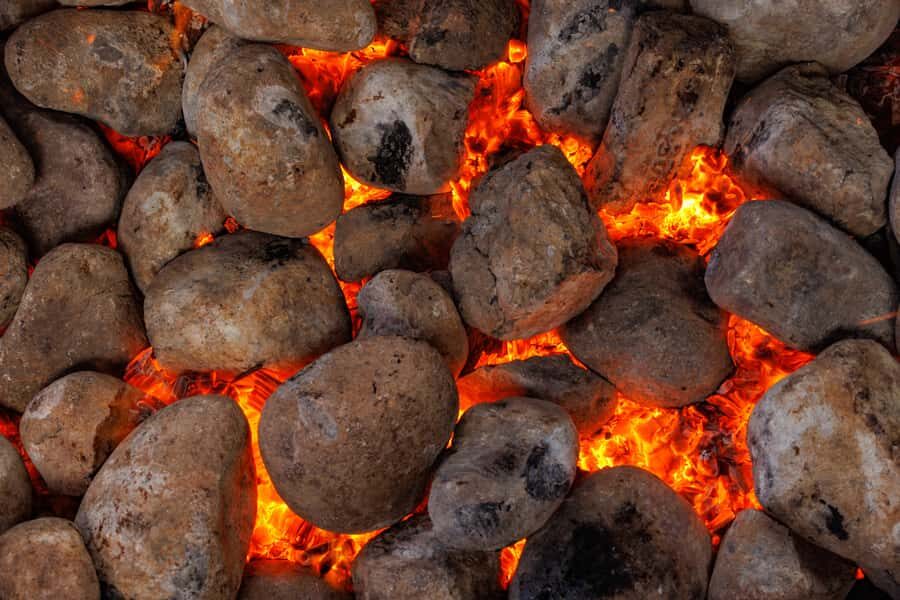
- Hāngi lunch at Mitai Māori Village, cooked in an earth oven with hot stones and baskets of kai
- Powhiri and welcome sequence plus song and chant like Waiata and Mōteatea
- Wero and Haka performances, with carving and ta moko art explanations
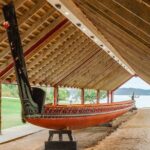
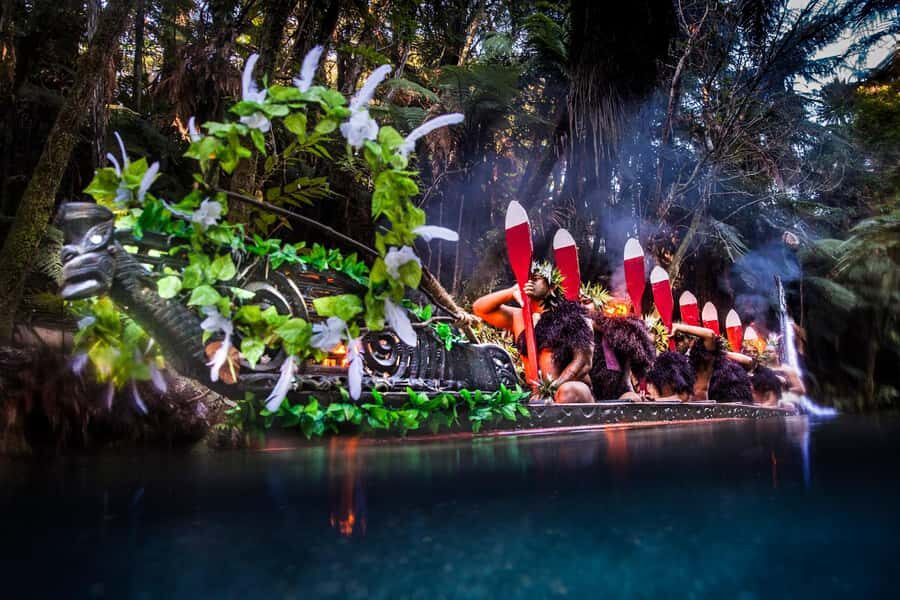
- Warrior canoe display on the Wai-o-Whiro stream
- Wai-O-Tapu self-guided walk, built around Champagne Pool and mud-and-steam geothermal features
A 13-Hour Auckland to Rotorua Day: What the Schedule Really Means
This is a straight-up, long day from Auckland, timed for maximum value: culture first, geothermal second. You’ll leave the city by minibus and travel through the Waikato region, with regular chances to look out for scenery and farm animals along the way. Plan on a full day away from your usual routine, not a quick side trip.
The transportation setup matters because it keeps you comfortable while you’re on the road. You’ll get temperature-controlled minibus service, refreshments and water onboard, and an English-speaking escort. There’s also high-speed internet onboard, which is handy if you want to message home or sort your photos before you get home.
One small practical note: the pickup system uses many Auckland CBD drop-off and pickup points. You’re advised to arrive 10 minutes early because the operator can’t hold the bus for late arrivals. If you’re staying in a hotel with a busy lobby, I’d build in a little buffer so you don’t sprint at the last second.
You can also read our reviews of more tours and experiences in Auckland.

Mitai Māori Village: The Hāngi Feast and Traditional Welcome Setup
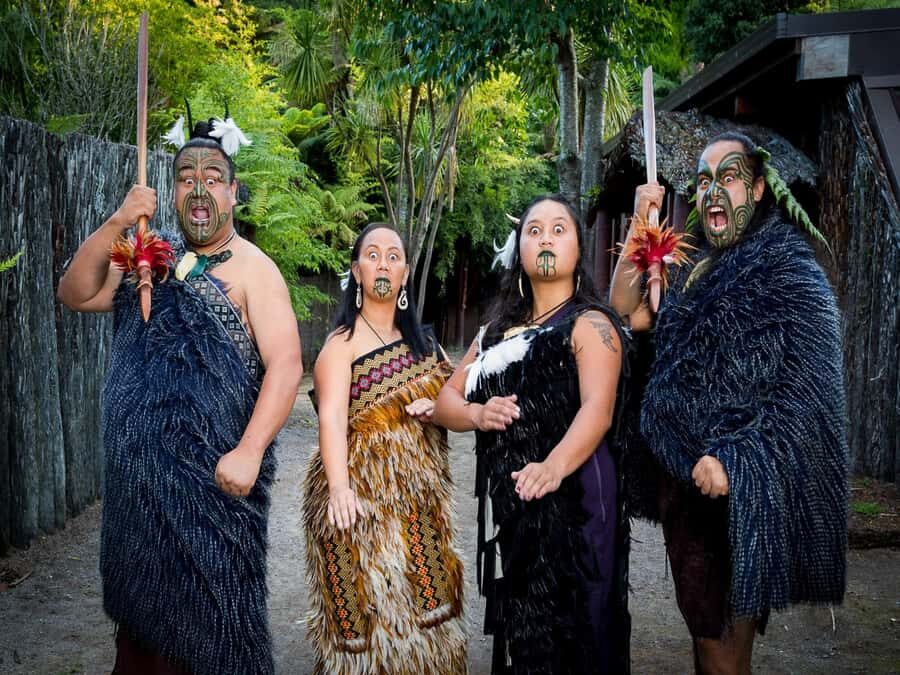
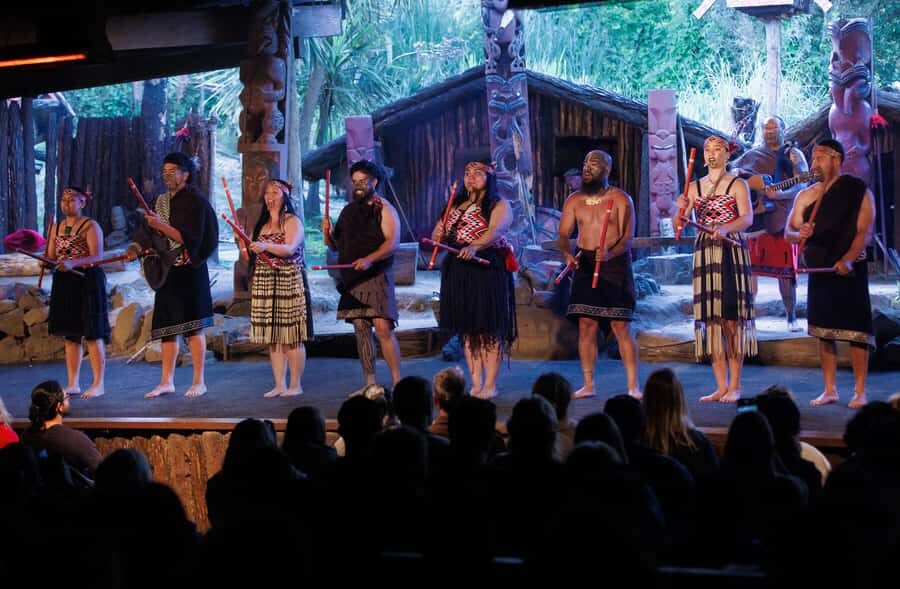
Mitai Māori Village is the tour’s cultural engine, and it starts the moment you arrive. Expect a traditional welcome and a run of performances that move from song and chant into dance and strong-styled warrior displays. It’s a structured program rather than random entertainment, so you’ll have a better sense of what you’re seeing and why it matters.
The food is a big deal here, and it’s not a buffet-on-a-plate situation. Lunch is a hangi buffet, with the kai prepared in an earth oven—there’s even detail about the hāngī pit: a hole about 1–2 meters down, hot stones at the bottom, and baskets of food placed on those stones. When you think about it, that cooking method explains the flavors you get: slow cooking plus smoky earth heat equals comfort food with a distinct taste.
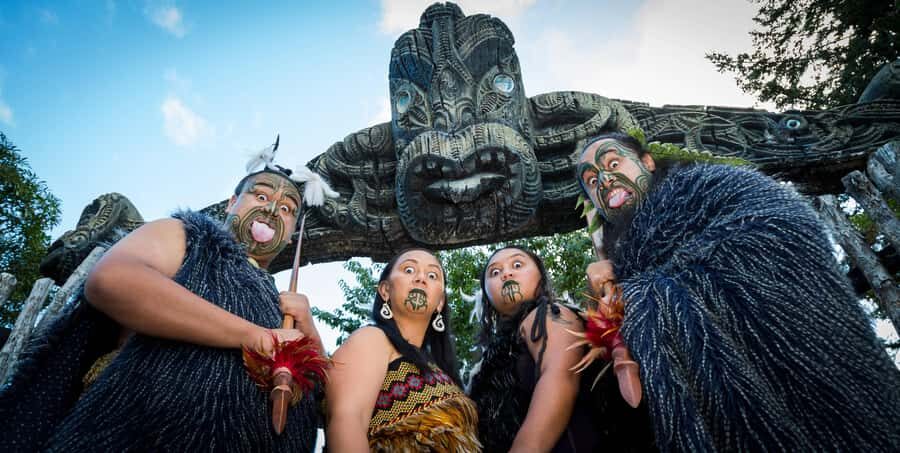
Performance-wise, you’ll see a full set of Māori arts and ceremony elements such as Pōwhiri (traditional welcome), Waiata (song), Mōteatea (traditional chant), plus Poi and Haka. The program also includes Wero, which is part of the warrior challenge tradition. You’re not just watching body language—you’re seeing how performance functions as communication.
If you care about the craft side, you’ll likely enjoy the way the show references carving and ta moko tattoo art. The cultural portion is designed to help you connect the visuals to meaning, including emotion and the idea of how identity is expressed.
Warrior Canoe Display on Wai-o-Whiro: A Moment of Real Intensity
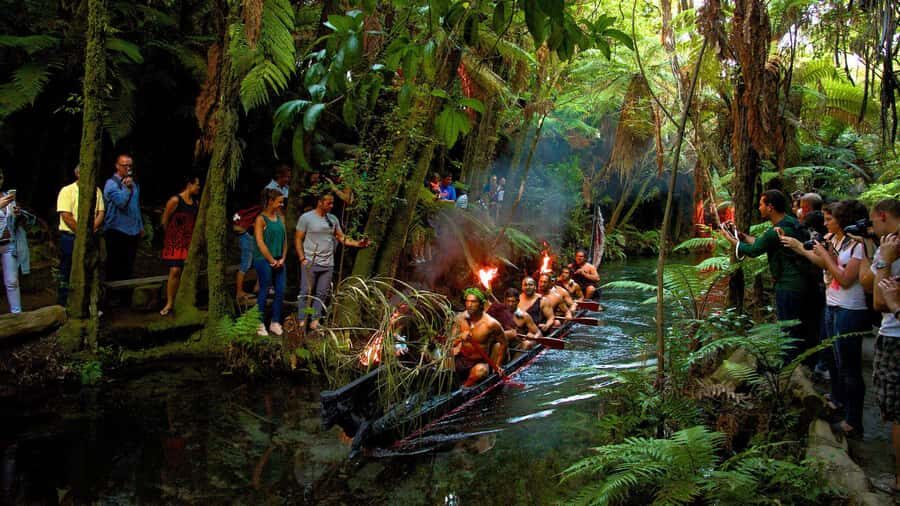
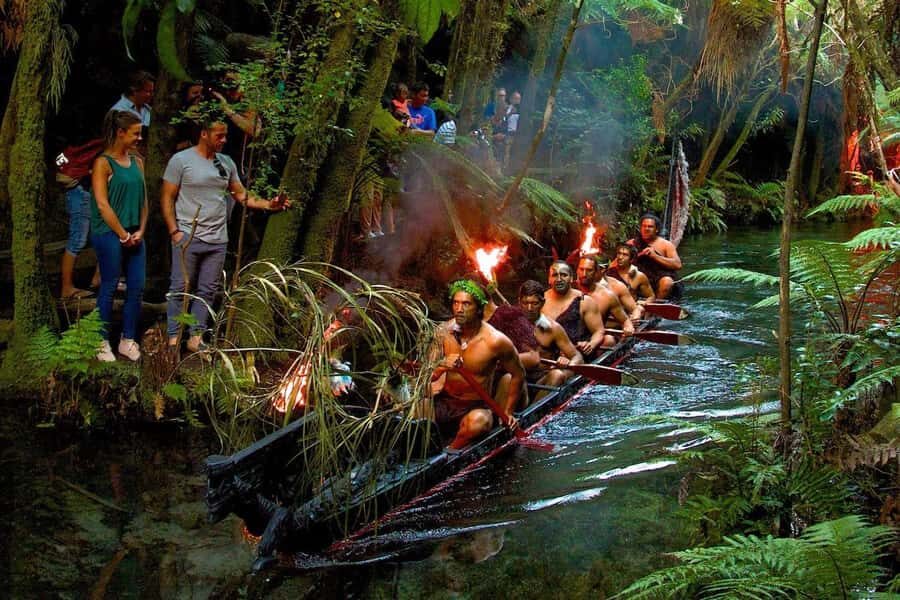
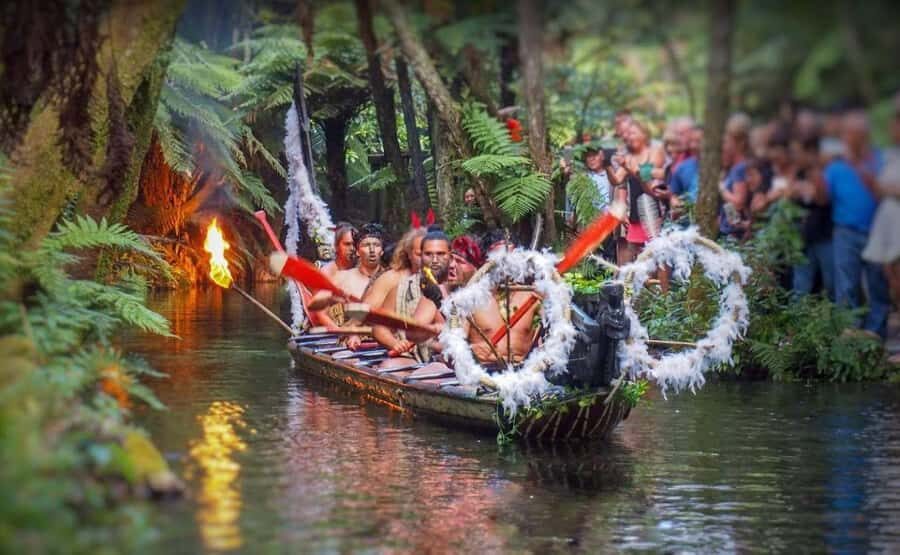
Right at the center of Mitai’s program is the warrior canoe experience. You’ll watch warriors navigate a war canoe on the Wai-o-Whiro stream, and the emphasis is on the energy of the moment. It’s not just a boat ride, and it’s not a soft, gentle demo—this is theatrical performance with force behind it.
The tour format also pairs this with weaponry and combat displays. That combination matters because it changes what you think you’re seeing. Instead of treating it like choreography only, you’ll understand why the program frames Māori warriors as fierce and disciplined.
One reason I like this kind of experience is that it gives you a story to follow while you’re there. Even if you don’t catch every word, the sequence helps you read the scene: welcome, song and chant, challenge, and then the canoe and warrior emphasis that ties the whole thing together.
Wai-O-Tapu Thermal Wonderland: Champagne Pool and the World’s Most Colorful Footpath
After lunch and performances, you shift from culture to geology. Wai-O-Tapu Thermal Wonderland is one of Rotorua’s most famous geothermal areas, and it’s easy to see why: you walk through a surreal geothermal zone where steam and color dominate everything.
This part is self-guided, not lecture-style. You’ll have built-in time to explore at your own pace during a window that’s described as about 45 to 90 minutes for the walks. That flexibility is a real plus because you can linger at your favorite spots instead of marching with the group like it’s school.
What you’re looking for includes the highlights you’ve probably heard about. The world-famous Champagne Pool is the headline, and the walk also features bubbling mud, steaming ground, and both hot and cold springs with natural color. You may also see Devil’s Bath and larger geothermal features like volcanic craters and sinter terrace formations.
The setting is in natural bush, so you’ll feel like you’re in a working, living geothermal area—not a sealed-off theme park. Still, treat it like active terrain. Expect uneven ground and follow signs closely. And please note the basic rules: don’t touch plants and don’t wander where you’re not supposed to.
Photo Strategy for Champagne Pool and the Mud-and-Steam Stops
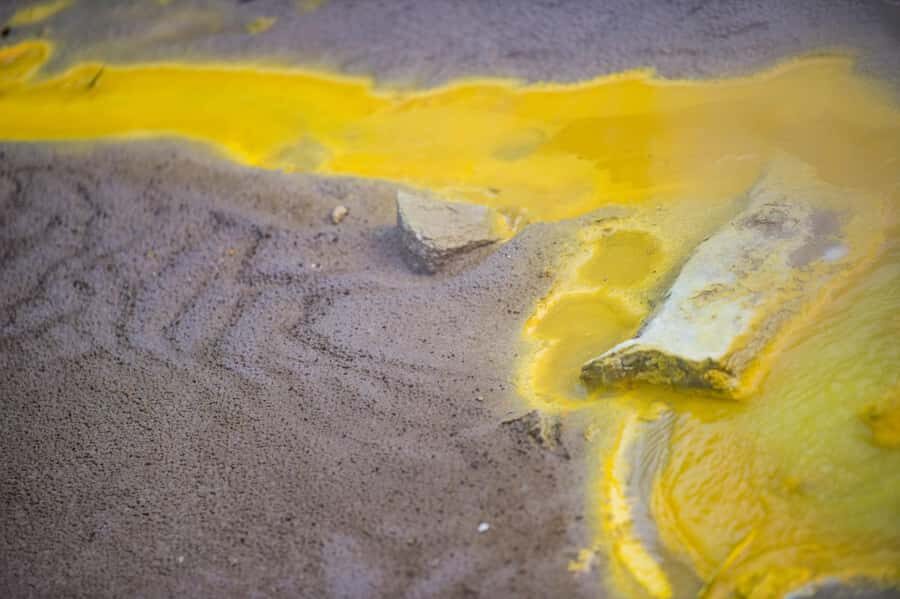
Wai-O-Tapu is basically a photo buffet. You’ll see steam, bright mineral colors, dark mud pools, and wide crater-style views. Since you’ll be on your feet on uneven paths, I’d keep your “photo plan” simple: capture the obvious first (like Champagne Pool), then go for details (mud bubbling, steam plumes, colored water).
Bring a camera or phone with camera capability and plan on using your hands for balance when the paths get rough—sturdy shoes help. A hat is also a smart call because the walk includes sunny exposure mixed with hotter geothermal air.
If you like photos with people in them, aim for spots where the background is interesting even without the subject. The geothermal terrain already gives you that wow factor, so you don’t need elaborate staging. Also, because it’s active ground, you’ll get better results by stepping back slightly rather than trying to get too close.





Getting Value for $283: What This Day Tour Bundles for You
Let’s talk value honestly. At $283 per person, you’re not just paying for driving. You’re paying for a full package that includes:
- Return transfers from Auckland CBD by minibus
- An English-speaking escort for the cultural and travel parts
- Admission and programming at Mitai Māori Village, including the hangi lunch and the performance portion
- Admission for Wai-O-Tapu self-guided entry
If you tried to assemble this yourself, the price would likely climb fast once you factor in transport time, entry costs, and the effort of coordinating schedules. Here, the day is built around a smooth handoff: culture first, then geothermal, without you doing the logistics puzzle.
One detail that improves the experience is the tour’s pacing. The cultural stop gives you a longer chunk of time (around 2 hours at Mitai), and Wai-O-Tapu gives you self-guided freedom inside a pre-set window. That combination tends to reduce the usual day-tour stress of constant transitions.
Also, this is a small-group setup. I can’t give you an exact headcount, but the minibus format usually means you’re not getting steamrolled by a huge crowd. That matters when you want to hear the guide and see the cultural elements clearly.
Tips That Make or Break the Day (And Save Your Feet)
This tour works best when you show up prepared for both cultural time and hot, uneven ground time. The operator recommends comfortable shoes, and I agree. Sandals or flip-flops just don’t make sense on geothermal trails.
Pack the basics:
- Comfortable shoes with good grip
- Hat, sunscreen, and water
- A camera or phone with enough battery
- Sun protection plus a warm layer or jacket, because Rotorua weather can change and you’ll be outside in a mix of conditions
You’ll also want to dress for walking on unpaved or uneven terrain. The tour is described as suitable for all ages but requires an easy-to-good fitness level, including climbing and descending stairs. If you’re the kind of traveler who hates uneven ground, you might find this portion tiring.
Diet is another practical point. The tour notes that some dietary requests could be met, but not all, and vegan options may not be available because of how Māori kai is handled. If food restrictions are a big deal for you, I’d check before booking and be ready for limited options.
Is This Tour Worth It for You?
If you want a Rotorua day that doesn’t choose between culture and geothermal, this is a strong match. You’ll get a cultural program at Mitai Māori Village with Pōwhiri, song and chant, Poi, Haka, and Wero, plus the added intensity of the canoe and combat-style displays. Then you switch to geothermal walking with time to explore Wai-O-Tapu’s Champagne Pool, bubbling mud, steaming ground, and crater views.
I’d especially recommend it for travelers who:
- Like experiences with a clear structure (not just browsing)
- Want one guide-led day that covers two of Rotorua’s biggest draws
- Are comfortable walking for your own pace during a geothermal trail segment
I’d skip it if:
- You use a wheelchair (the tour states it’s not suitable)
- You can’t handle uneven terrain and stairs
- You need fully flexible dietary options, especially vegan
Should You Book This Auckland to Rotorua Tour with Mitai Māori Village & Wai-O-Tapu?
I think you should book if you want the best kind of day tour in Rotorua: culture with real ceremony elements, then a self-guided walk through one of the most famous geothermal areas in New Zealand. The $283 price makes more sense when you remember you’re bundling return transport, guided cultural programming, and the hangi lunch with entry to Wai-O-Tapu.
You should pass if your main goal is total relaxation. This is a long day with walking on uneven ground, and you’ll be outdoors in changing conditions. If you can handle a full-day pace and you want both Māori performances and geothermal wonders, this is the kind of trip that sticks with you.
FAQ
What is the duration of the Auckland to Rotorua tour?
The tour duration is listed as 13 hours.
Where does the tour operate?
It operates in New Zealand’s North Island, with pickups and drop-offs in Auckland and a day trip to Rotorua.
Is hotel pickup included?
Yes. You’ll be picked up from Auckland CBD locations, and the tour includes return transfers.
What happens at Mitai Māori Village?
You’ll enjoy a guided tour and traditional activities, including a hangi buffet lunch and cultural performances, plus a warrior canoe experience as part of the program.
Is the Wai-O-Tapu part guided?
Wai-O-Tapu is described as self-guided. You’ll have a walk time to explore the area at your own pace, with a photo stop included.
How long do you spend at Wai-O-Tapu Thermal Wonderland?
The tour schedule lists a Wai-O-Tapu visit time of about 75 minutes, and the self-guided walk is described as taking between 45 and 90 minutes.
What language is the tour guide/escort?
The tour escort and live guide are in English.
What should I bring for the tour?
Bring comfortable shoes, a hat, camera, sunscreen, and water.
Are there dietary options available?
Some dietary requests could be met, but the tour notes it cannot cater to all needs (including vegan options).
Is the tour suitable for wheelchair users?
No. The tour is not suitable for wheelchair users.
What is not allowed during the experience?
Smoking is not allowed, and you should not touch plants in the geothermal area.