REVIEW · AUCKLAND
Shore Excursion: Half-Day Auckland Volcanoes Tour
Book on Viator →Operated by Voltours Limited · Bookable on Viator
Auckland’s volcanoes are in plain sight. This half-day tour strings together crater walks and viewpoint stops around Auckland’s tallest volcanic peaks, with guide commentary that connects the rocks to Maori settlement and the city you see from above. You’ll get short summit walks rather than a long bus-and-back shuffle.
I really like the way this tour is organized around the sights that matter most, with convenient downtown pickup and a small-group feel (max 11). Guide Mike shows up in the details: he’s patient, answers questions, and keeps the pace steady while you move between craters and viewpoints.
One thing to consider is the weather. The tour runs in all weather, and fog or heavy rain can mute the views from the summits—so pack for wet conditions and don’t plan on perfect photos if the sky turns.
In This Review
- Key things that make this tour worth your morning
- Why Auckland’s volcanoes feel different on foot
- Price, pacing, and what $179.97 buys you
- Morning logistics: pickup, timing, and small-group comfort
- Stop 1: Achilles Point for Hauraki Gulf views and early settlement stories
- Stop 2: Mt Wellington crater walk and the 10,000-year timeline
- Stop 3: Mangere Mountain craters and a Manukau Harbour horizon
- Stop 4: One Tree Hill (Maungakiekie) for British–Maori history and Cornwall Park views
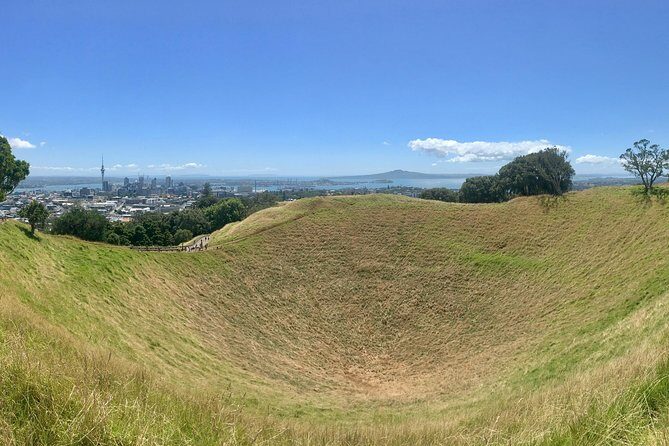
- Stop 5: Mt Eden crater ring for city-and-volcano skyline views
- What the guide actually adds (and why Mike’s style matters)
- Walking level, shoe choice, and weather reality
- Food, water, and how to plan your half day
- Who should book this tour (and who should skip it)
- Should you book the Half-Day Auckland Volcanoes Tour?
- FAQ
- Which volcanoes are included in the Auckland Volcanoes tour?
- How long is the tour and when does it start?
- Where is the meeting point, and do you return there?
- Is food and drinks included?
- What should I bring for the weather and walking?
- What happens if the tour can’t run due to poor weather?
Key things that make this tour worth your morning
- Four major volcanoes + two extra viewpoints in a logical half-day loop
- Short summit walks that feel like a hike, not a sightseeing treadmill
- Crater access options, including a steep-sided choice at Mt Wellington
- City and harbor panoramas from multiple angles (Hauraki Gulf and Manukau Harbour)
- Guide Mike’s storytelling, linking geology with Maori and British-era history
Why Auckland’s volcanoes feel different on foot
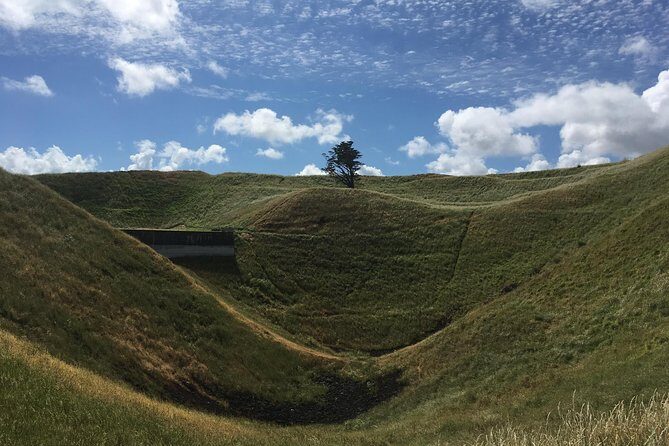
Auckland can look like a normal coastal city—until you start seeing the crater edges and tuff-colored ground under your feet. This tour leans into that fact. You don’t just look at volcanoes from a distance; you walk around them briefly, so the shape of each peak becomes obvious.
The best part is the pacing. In about five hours, you hit several volcanic high points and still get time for commentary at the stops. That’s a big deal on a cruise day when you can’t afford to waste time going back and forth through traffic.
You’ll also learn the big Auckland volcanic-field idea: it’s active in the sense that the area is still volcanic, but the specific eruption sites are hard to predict. The tour also frames each crater as part of a much wider system, not a one-off tourist attraction.
You can also read our reviews of more tours and experiences in Auckland
Price, pacing, and what $179.97 buys you
At $179.97 per person for an approximately 5-hour half day, you’re paying for more than a bus ride. This is private vehicle transport, port/downtown pickup and drop-off, and a guided route that squeezes multiple crater walks into one schedule.
Is it worth it? It often is if you fit one of these profiles:
- You want the volcano story without building your own itinerary across the city.
- You like short hikes where the payoff is a summit view.
- You’re the type who enjoys geology facts, plus how Maori and later British settlement connected to the land.
If you’re mainly chasing the cheapest tour or you dislike any walking at all, the value can feel harder to justify—especially if weather limits viewpoints. The good news: the tour’s structure is built around brief walks, so it stays manageable for most visitors.
Morning logistics: pickup, timing, and small-group comfort
The tour starts at 8:00 am and runs about 5 hours. You meet at 148 Quay Street in Auckland Central, and the tour returns you back to that same meeting point.
This matters because it keeps the day simple. You’re not coordinating multiple transfers or finding parking on steep hills. With pickup offered from locations in downtown Auckland and transport by a private vehicle, the schedule stays tight.
Group size is capped at 11 travelers, which helps a lot. You get enough attention to ask questions when they come up—like why crater shapes differ, or how Maori communities related to volcanic terrain. Multiple comments highlight the guide’s flexibility too, which you’ll feel when the group moves slower due to photos, questions, or uneven ground.
Stop 1: Achilles Point for Hauraki Gulf views and early settlement stories
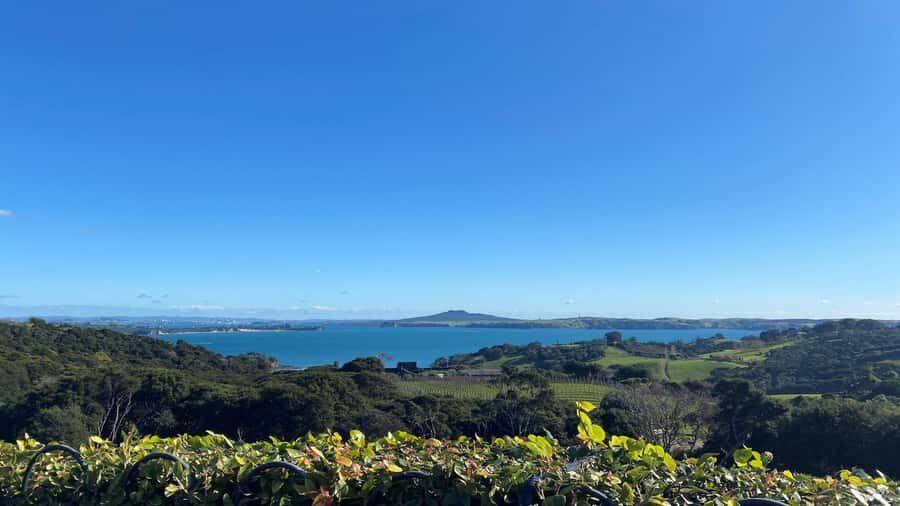
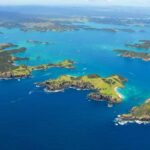
The day opens with Achilles Point, about 15 minutes. From here you get a clear look toward the volcanic islands of the Hauraki Gulf, including Rangitoto and Motukorea, plus a view of the city below.
This stop works as an orientation moment. Seeing the water and island silhouettes first helps you understand that Auckland’s volcanic story isn’t only inland peaks—it’s also tied to the surrounding gulf. Then the commentary pivots toward early Maori arrival and settlement, so the landscape becomes part of a human story, not only a science lecture.
Practical note: since this is a viewpoint stop, come prepared for sun and wind. Even on a clear morning, coastal weather can change quickly.
Stop 2: Mt Wellington crater walk and the 10,000-year timeline
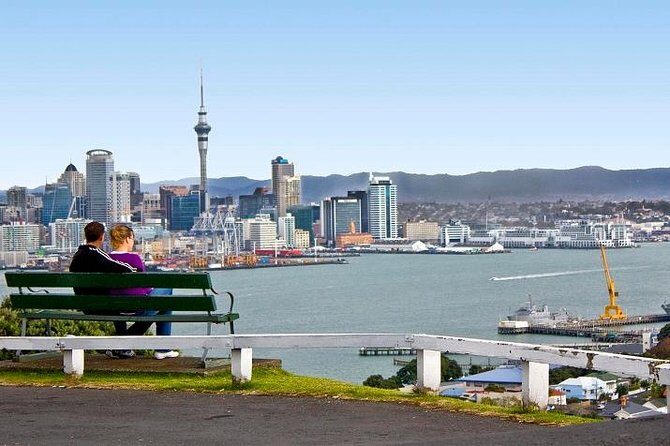
Next up is Mt Wellington, where you’ll walk toward a crater near the summit. The time here is about 45 minutes, and the guide frames it in a “how old is this?” way, including that Mt Wellington is around 10,000 years old.
This is the first real walking challenge of the day. You’re moving on natural terrain, and the steepness can vary by the path and conditions. The good part is that the crater walk makes the geology feel personal—your footing traces the volcanic shape.
There’s also an optional element: you can choose to enter the steep-sided crater. If you like bolder photo angles and don’t mind uneven ground, it’s a memorable add-on. If you prefer to stay on the safer edge, you can still enjoy the walk and the crater context without going in.
This stop also connects Maori settlement ideas to the volcanic field. The tour doesn’t treat craters as museum objects; it treats them as places people lived with.
You can also read our reviews of more tours and experiences in Auckland
Stop 3: Mangere Mountain craters and a Manukau Harbour horizon
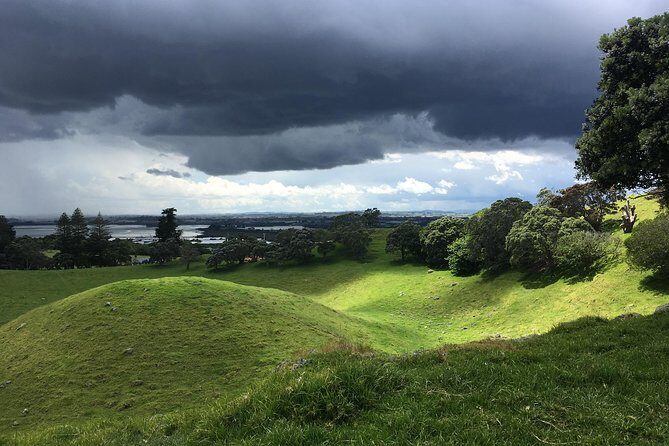
Then it’s on to Mangere Mountain for another 45-minute crater walk. Here you’ll walk around the craters and learn about the large Maori settlement associated with this volcano, plus how it fits into the bigger volcanic pattern around Auckland.
The viewpoint payoff is different from Mt Wellington. From Mangere Mountain you look toward the Manukau Harbour, which gives you a strong “Auckland isn’t one direction” feeling. On a single half-day you get both the gulf-side story and the harbor-side story—so the city’s geography makes more sense.
Drawback to be aware of: this stop is still a walk on uneven ground. Nothing extreme is promised, and the tour notes that most travelers can participate, but you should expect some effort—especially if it’s wet.
Stop 4: One Tree Hill (Maungakiekie) for British–Maori history and Cornwall Park views
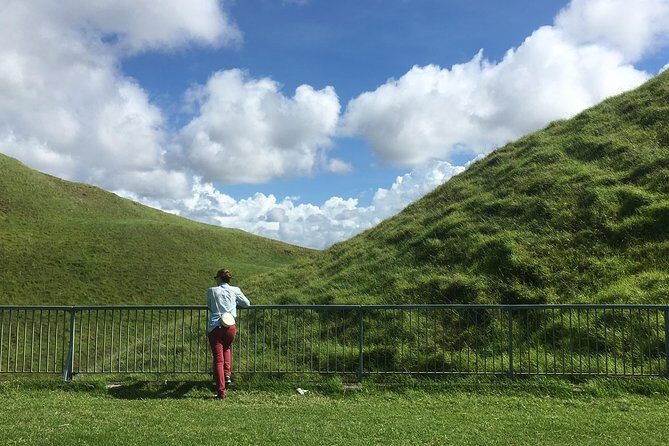
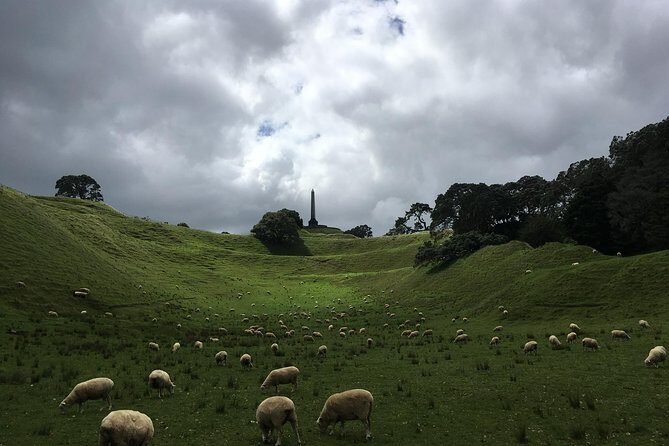
The schedule shifts into history and urban views with One Tree Hill (Maungakiekie). This stop is about 30 minutes.
You get a summary of New Zealand history, with special focus on early interaction between the British and Maori. That’s a helpful change of pace after crater walking. It also gives you a way to interpret what you’ve been seeing: volcanic high points weren’t only scientific curiosities, they were part of where people understood power, land, and settlement.
After the crater-view time, you’ll drive around Cornwall Park, where you can spot more volcanic craters from the road. This is smart for two reasons:
- It adds extra sights without extending walking time.
- It reinforces that volcanoes are scattered around Auckland, not isolated attractions on one hill.
If you like photo stops, this is also a good moment to take quick shots without committing to another long walk.
Stop 5: Mt Eden crater ring for city-and-volcano skyline views
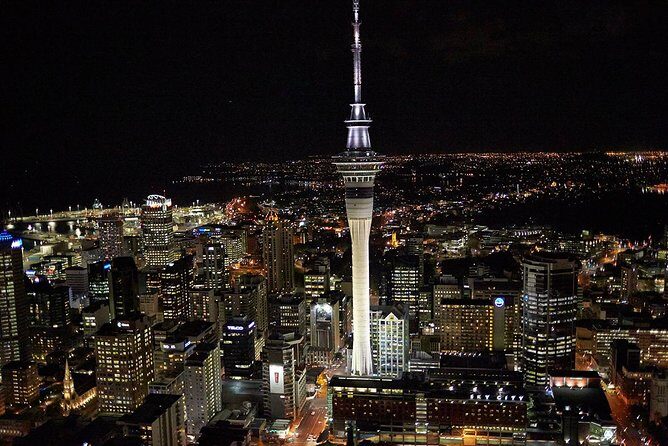
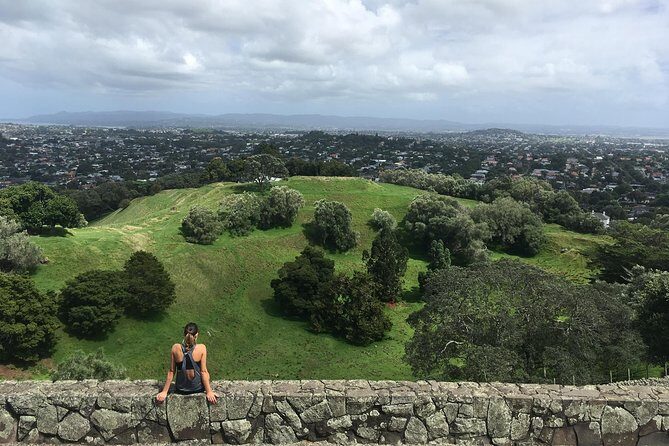
The last crater-focused stop is Mt Eden (Maungawhau). You’ll walk around the crater here for about 45 minutes.
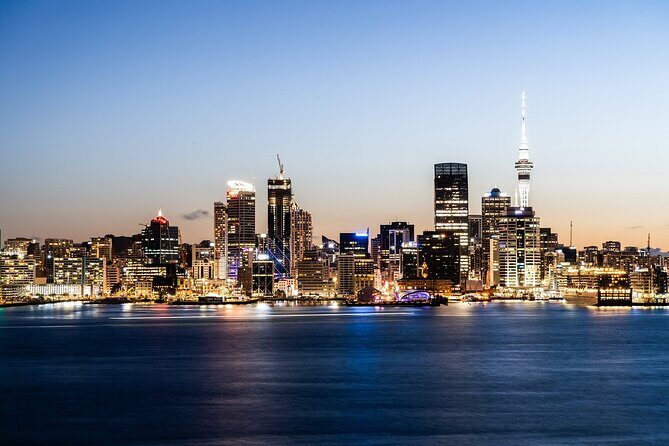
This is the “Auckland from above” moment. You’ll get magnificent views of the city and the surrounding volcanic peaks from the crater summit area. It’s the kind of viewpoint where, once you’ve seen a few craters that morning, you start identifying volcanic shapes instinctively.
One of the subtler benefits of ending at Mt Eden is psychological. After earlier stops explained the volcanic field and Maori connections, the final crater walk becomes the final puzzle piece: you see the city spread out across the volcanic terrain you’ve just been tracing.
If it’s clear weather, this is where the photos usually look best. If it’s foggy or rainy, you’ll still learn plenty, but the skyline payoff may be muted.
What the guide actually adds (and why Mike’s style matters)
A lot of volcano tours can become either dry science or vague storytelling. This one tries to balance both: geology and natural history, plus the human side of Maori settlement and later British-era interactions.
Guide Mike comes up repeatedly in the experience feedback as a key reason people enjoy the day. The pattern is consistent: he’s patient, answers questions, and keeps the information at a pace that works while you’re walking. When you’re switching between crater paths and viewpoint edges, you don’t want a guide rushing to the next stop. You want someone who can slow down for a question and then bring you back into motion.
If you like learning in small doses, this style fits well. If you want a strict timeline with no flexibility, you might still find the pace comfortable, but the guide does prioritize questions and photo moments.
Walking level, shoe choice, and weather reality
Expect short summit walks throughout the tour—total walking time isn’t stated, but each stop includes time on foot, and several mention crater edges and natural terrain.
A good rule: plan for steep patches and uneven ground, especially at the crater areas. One review notes steepness in the walk, but also calls it manageable—so think “effort,” not “climbing a mountain.”
What to bring is straightforward:
- Comfortable walking shoes with traction for damp paths
- Sunscreen
- Wet weather gear in case weather turns
- A light layer for morning wind and fog
The tour runs in all weather conditions, so you’re not guaranteed blue skies. But the upside is that the route still makes sense even when visibility is reduced—because the crater walks and guide commentary stay the point.
Food, water, and how to plan your half day
Food and drinks are not included, so you’ll want to plan around that. The itinerary times are short at each stop, and the schedule is built around getting from one crater to the next.
That said, water and sunscreen were appreciated by people who did the tour, which helps on sunny mornings. Still, bring your own snack if you tend to get hungry. A half day can turn into a long one when you’re walking and taking photos.
Who should book this tour (and who should skip it)
This is a great fit if:
- You want an intro to Auckland’s volcanic field without doing research and driving yourself.
- You enjoy a mix of views + short hikes.
- You care about how geology connects to Maori settlement and British–Maori interactions.
It may be less ideal if:
- You’re uncomfortable with crater-edge walks or uneven natural paths.
- Your priority is only scenic cruising photos and you hate any walking at all.
- Weather is forecast to be very poor for your entire cruise window, and you don’t want any uncertainty.
Because the group stays small and the guide structure is built around the route, it’s a smart choice for first-time visitors who want to understand what makes Auckland different.
Should you book the Half-Day Auckland Volcanoes Tour?
If you want the simplest route to see why Auckland is basically a city built on volcanic terrain, I’d book it. The value comes from stacking multiple crater walks into one morning, with pickup and private transport so you’re not wasting time.
Before you reserve, do two quick checks:
- If you’re sensitive to hills and uneven ground, be honest with yourself about crater walks. It’s manageable for most people, but it’s still walking.
- If visibility is critical to you, keep in mind the tour runs in all weather. With rain or fog, the geology lesson and walking still matter, but the skyline views can be toned down.
If those tradeoffs sound fine, this tour is one of the most practical ways to get beyond the usual “city highlights” and really understand Auckland from the inside out.
FAQ
Which volcanoes are included in the Auckland Volcanoes tour?
You’ll visit Mt Eden, One Tree Hill (Maungakiekie), Mangere Mountain, and Mt Wellington, with additional viewpoint stops that connect the volcanic story to the surrounding area.
How long is the tour and when does it start?
The tour runs for approximately 5 hours and starts at 8:00 am.
Where is the meeting point, and do you return there?
You meet at 148 Quay Street, Auckland Central, and the tour ends back at the meeting point.
Is food and drinks included?
Food and drinks are not included.
What should I bring for the weather and walking?
Bring sunscreen and wet weather gear in case the weather turns bad, and dress appropriately since the tour operates in all weather conditions.
What happens if the tour can’t run due to poor weather?
If it’s canceled due to poor weather, you’ll be offered a different date or a full refund.