REVIEW · AUCKLAND
Volcanoes, Coasts, and Secret Spots Afternoon Tour in Auckland
Book on Viator →Operated by Voltours Limited · Bookable on Viator
Auckland’s volcanoes are closer than you think. This afternoon tour strings together crater-lake scenery, Māori cultural context, and the real 19th–20th century story of North Head’s underground tunnels. I also love the small-group feel, so the guide can tailor the pace and answer questions as you stop and walk.
The trade-off is simple: you’ll do some outdoor walking on uneven volcanic ground. If you’re expecting flat sidewalks the whole time, you may find parts of the route slow or a bit tricky, especially with wet weather.
One more thing that makes this work so well for a first or second day in Auckland: it’s timed to fit other plans in the morning. With pickup from central Auckland or the port and a return drop-off, you keep the day flexible while still getting an authentic slice of the North Shore.
In This Review
- Key highlights you’ll actually remember
- Why the North Shore feels like Auckland’s volcanic backstory
- Lake Pupuke: a crater lake stop that’s more than a quick photo
- From Takapuna’s lava rocks to a coastal walk with old-tree clues
- North Head Historic Reserve: tunnels, gun emplacements, and the WWI/WWII layer
- The Cyril Bassett VC Lookout: skyline views without the city crowds
- Devonport village stroll: craftsman-style houses and a slower pace
- Small-group van comfort and the reality of pacing
- What the price includes (and where it’s great value)
- Who should book this Auckland afternoon volcano tour
- Should you book this tour?
- FAQ
- What time does the tour start?
- How long is the Volcanoes, Coasts, and Secret Spots afternoon tour?
- Where do I meet the guide?
- Does the tour include pickup from the port and central Auckland?
- Is food included?
- How much walking is involved and what fitness level do I need?
- Is the tour weather-dependent?
- How big is the group?
Key highlights you’ll actually remember
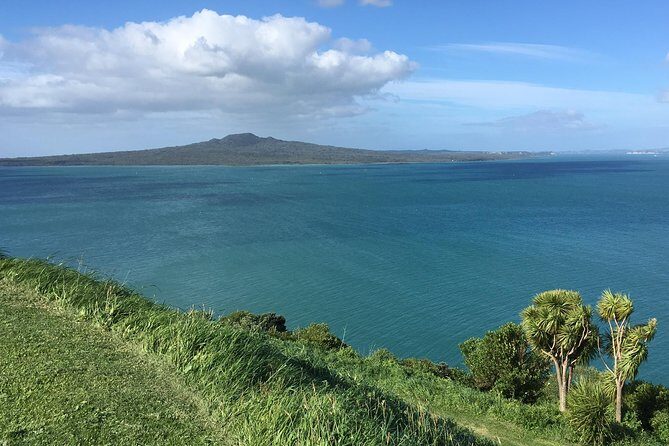
- Lake Pupuke crater lake photos with Māori legend context and an easy stop for ice-cream
- Takapuna to Milford coastal walking through black rocks from ancient lava flows
- North Head Historic Reserve tunnels and gun emplacements built in the 19th century, later used in WWI/WWII
- Cyril Bassett VC Lookout for classic Auckland skyline framing across the harbor
- Devonport village time to wander shops and admire craftsman-style houses
- Guide-led, low-stress pacing with pickup and drop-off included
Why the North Shore feels like Auckland’s volcanic backstory
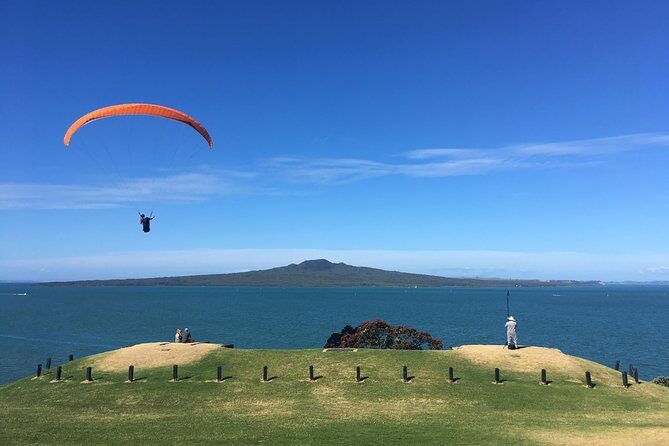
Auckland is famous for the harbor and the skyline, but the North Shore is where the ground starts telling the story. This tour uses a simple idea: visit the places where volcanic activity shaped the coast, then add the human layer—Māori history and the later military use of the same headlands.
You get that “small museum, big views” feeling. Lake Pupuke shows a crater lake formed by an explosion; the coast around Takapuna shows how lava hardened into black rock; North Head shows how that same volcanic ash and rock became a fortress foundation with underground works. Then the skyline view ties it together—modern city life sitting on very old terrain.
The best part for most people is the format. It’s a half-day window (about 4 hours) that doesn’t eat your whole day, and it’s guided in a way that supports questions while you’re walking. If you like your history tied to where you stand, this is your kind of tour.
You can also read our reviews of more tours and experiences in Auckland.

Lake Pupuke: a crater lake stop that’s more than a quick photo
You start at 2:00 pm, with pickup from central Auckland or the port, then a drive across the Harbour Bridge toward Devonport. That bridge moment matters. It helps you understand how close these “secret spots” are to the city—especially if you’re still figuring out Auckland’s geography.
Stop one is Lake Pupuke, a freshwater lake inside an ancient volcanic explosion crater. You’ll have about 20 minutes here, enough time to grab photos and take in the calm water against the volcanic setting. This is also where the Māori legends are brought in—so it’s not just geology, but place-based meaning.
A small but practical detail: there’s time for a treat. The stop includes the option to buy an ice-cream. It sounds minor, but in real travel time, it’s the difference between a rushed “next!” tour and one that feels human.
Potential drawback to note: because you’re outdoors, cloud cover or light rain can change how “sparkly” the lake looks. You still get the crater context, but your photo results depend on the sky.
From Takapuna’s lava rocks to a coastal walk with old-tree clues
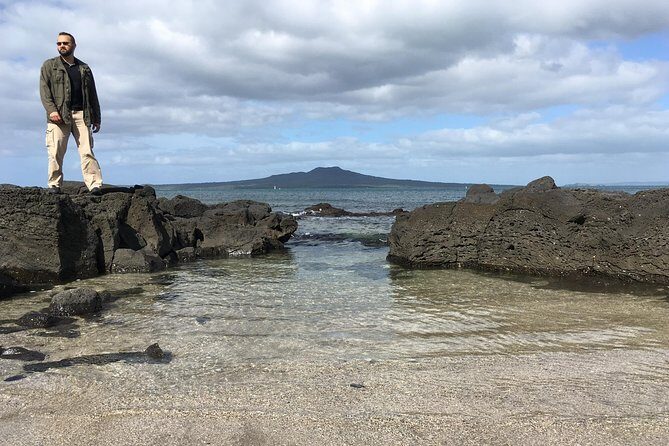
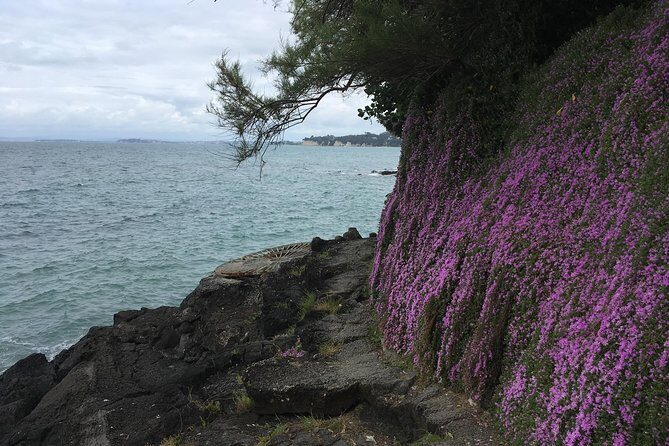
Next you’ll move to Takapuna, with time around the coast area (about 40 minutes) that connects into the famous Takapuna to Milford coastal walk stretch. This is one of the most memorable parts because the ground gets visual fast.
Here’s what you’re looking at: waves crashing over black rocks formed by ancient lava flows. It’s dramatic in a way that makes geology feel real instead of textbook. You’ll also spot tree moulds—the shape left behind when lava moved through an ancient forest. That detail is the kind of thing you don’t just see; it changes how you read the shoreline afterward.
What I like about this stop is the mix: it’s scenic, it’s active, and it has concrete talking points. It’s also a good place to slow down. You can take your time watching the surf, especially if the wind isn’t too sharp.
One caution: this portion is outdoors and you’ll be on coastal terrain. If the weather is wet, stick to stable footing and keep your pace comfortable. The tour runs in all weather, so conditions can shift during your afternoon.
North Head Historic Reserve: tunnels, gun emplacements, and the WWI/WWII layer
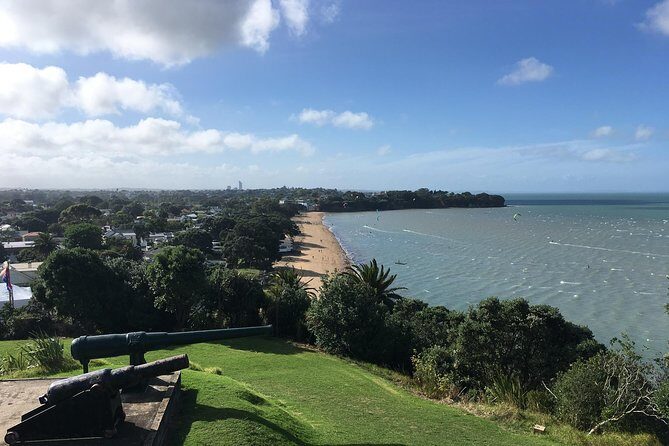
Then you get the tour’s big “how did this happen?” moment: North Head Historic Reserve. This area is now a historic fortress built on volcanic material, and the walk leads you into the underground works.
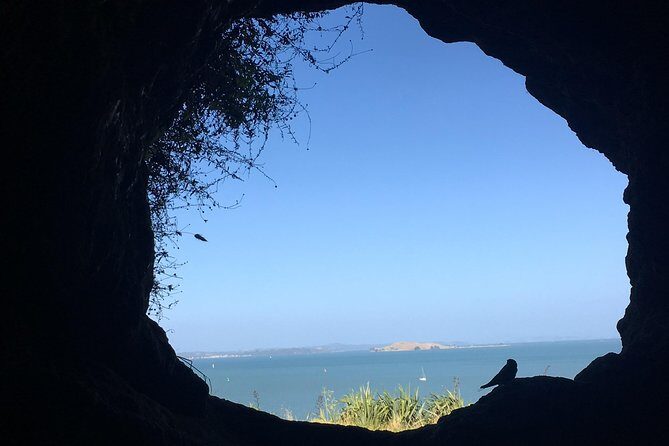
You’ll explore an artificial tunnel network and gun emplacements under the mountain. The key timeframe is 19th century construction, with later use during WWI and WWII. That creates a neat timeline: volcanic formation first, then a human decision to turn the terrain into protection and strategy.
What makes this stop especially valuable is contrast. From the outside, North Head feels like a viewpoint and a headland. Inside, you see the engineering logic of war-era construction—reinforced spaces carved out of volcanic ash, built for function, not comfort.
In reviews and in real-world tours like this, one pattern shows up: the underground part is usually where people say it felt the most cinematic. Even if you’re not a history buff, the physical experience of moving through the tunnels makes the story stick.
Practical tip: wear shoes with grip and expect damp or uneven surfaces underground. You’re also in enclosed or semi-enclosed areas, so keep layers light but ready.
The Cyril Bassett VC Lookout: skyline views without the city crowds
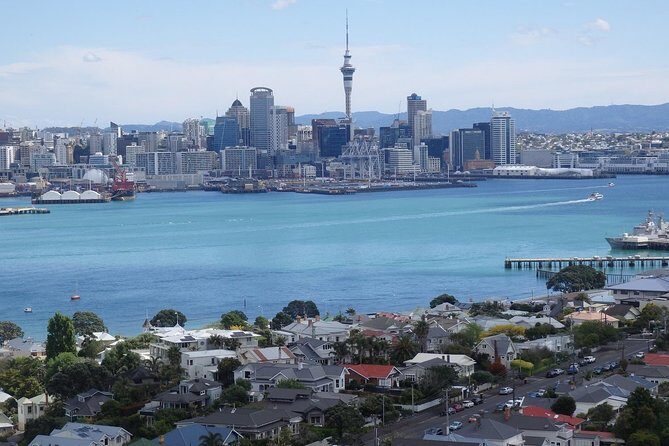
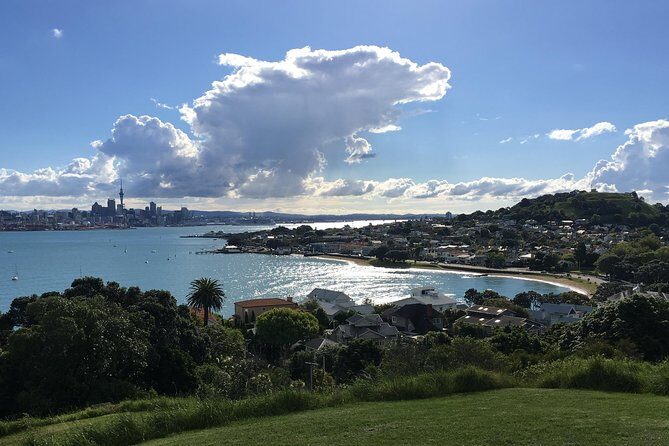
After tunnels, you shift back into open-air viewing with a stop at the Cyril Bassett VC Lookout. It’s close to Auckland City across the harbor, so it’s an easy win for skyline photos—especially with the Sky Tower often in the frame.
Time here is short (about 5 minutes), so treat it like a photo-and-breathe moment. The goal is to get your bearings: you’ll see the harbor geometry and how the North Shore sits opposite the central city.
I like this timing because it breaks the day’s “walk and explore” rhythm with a quick reset. You get the city payoff, but you don’t feel like you’ve been parked at a single spot for ages.





Devonport village stroll: craftsman-style houses and a slower pace
Next, you’ll spend time in Devonport village, with the chance to see the cute shops and craftsman-style houses. This isn’t a long, structured activity—more of a free-wander window inside a town that feels removed from downtown Auckland while still being close.
This stop is worth it because it gives your brain a breather after the geology and tunnels. You can look around at architecture, browse small places if you feel like it, and just enjoy the atmosphere.
If you’re the kind of traveler who likes to end tours with a “walkable” finish, Devonport does that well. It also helps you plan your own next move because you’ll have time to decide whether you want to keep wandering here afterward.
Small-group van comfort and the reality of pacing
This is a guided minivan tour, and that vehicle choice matters. With a smaller vehicle, you get quicker transfers and a more direct route between stops, without turning the day into a bus schedule.
You’ll also get personalized attention. The tour is built for a small group setting (the tour descriptions mention very small numbers, and the operation sets a low maximum). In practice, that means you’re more likely to get your questions answered and less likely to feel lost while walking.
The guide name that comes up often is Mike (sometimes listed as Michael). People consistently point out the storytelling style—especially on the walking segments where he can connect the scenery to the “why.”
Also, expect the tour to be outdoors most of the time. The tour runs in all weather conditions, and you should dress for that. Good shoes and a light rain layer go a long way.
What the price includes (and where it’s great value)
At $99.29 per person, this isn’t the cheapest way to move around the North Shore—but it’s also not priced like a private charter. The value comes from what’s packaged together:
- A local guide
- Pickup and drop-off from central Auckland or the port
- Admission where needed at key stops
- Time-efficient routes that combine coastline, crater geology, and underground fortification history
What’s not included is food and drinks. That’s normal for a half-day tour, but it’s worth planning around. If you want lunch afterward, you’ll have better energy if you eat before or after, not during.
In plain terms: you’re paying for interpretation plus access. Lake Pupuke and the North Head tunnels aren’t just scenic stops; they’re places where a good guide helps you read the land and the stories.
Who should book this Auckland afternoon volcano tour
This tour is a strong fit if you want:
- A first-time Auckland orientation that still feels off the main tourist map
- A mix of volcanic geology and human history
- Scenic walking without needing a full hiking day
- Small-group attention and a guided rhythm
It may be less ideal if:
- You need fully smooth, flat surfaces (some parts involve uneven volcanic terrain)
- You dislike tunnels or enclosed spaces
- You want a strictly city-only experience with no outdoors
Should you book this tour?
If you’re curious about why Auckland looks the way it does—especially the North Shore—this is an efficient, high-impact choice. The combination of Lake Pupuke crater context, the lava-coast walk at Takapuna, and the North Head underground tunnels gives you a clear story in one afternoon.
Book it if you can handle moderate walking and want a guide-led route that feels authentic rather than rushed. Skip it if you’re not comfortable with uneven footing or you’d rather spend your time in the city core. For most travelers, this lands in the sweet spot: real scenery, real history, and enough structure to make it easy to enjoy.
FAQ
What time does the tour start?
The tour starts at 2:00 pm.
How long is the Volcanoes, Coasts, and Secret Spots afternoon tour?
It runs for about 4 hours.
Where do I meet the guide?
The listed meeting point is 148 Quay Street, Auckland Central, Auckland 1010, New Zealand.
Does the tour include pickup from the port and central Auckland?
Yes. It includes port pickup and drop-off, and transfers from central Auckland are offered.
Is food included?
No. Food and drinks are not included.
How much walking is involved and what fitness level do I need?
It’s described as suitable for travelers with a moderate physical fitness level. You’ll do short walks at stops, including coastal and volcanic terrain.
Is the tour weather-dependent?
It operates in all weather conditions, but it also notes that it requires good weather. If it’s canceled due to poor weather, you’ll be offered a different date or a full refund.
How big is the group?
It’s set up as a small-group experience. The details mention no more than 5 people in the small-group description, and the tour sets a maximum limit (listed as 11 travelers).