REVIEW · AUCKLAND
Māori Cultural Experience & Auckland Museum General Admission
Book on Viator →Operated by Auckland War Memorial Museum · Bookable on Viator
Haka, songs, and poi hit harder in real time. Living Taonga at Auckland Museum gives you a Māori cultural performance led by indigenous artists and orators, plus general admission to see the museum’s natural history and New Zealand heritage exhibits. One thing to consider: parts of the experience are time-bound, and the exact amount of haka shown can vary, so manage expectations if you want a long, heavy haka segment.
I also like the simple payoff: you get culture first, then you can wander the museum at your own pace. And you don’t have to add another ticket purchase to make it work—this package is built to be a smooth “one-stop” afternoon. Just note that the Māori Court & Pacific Galleries are temporarily closed for maintenance, which can affect what you hope to see inside the museum.
In This Review
- Key highlights worth planning around
- Why Auckland Museum is the right stage for Living Taonga
- What the Māori Cultural Performance covers (waiata, poi, and haka)
- A watch-out if you’re expecting a long haka showdown
- How long to plan, and what pacing feels like
- Your museum ticket: what you can see after the show
- What’s not included
- Closed galleries and how to adjust your expectations
- Getting more from the show: respect and smart listening
- Price and value: is $38.48 worth it?
- Who this experience suits best
- Should you book this Auckland Museum Māori cultural experience?
- FAQ
- Where does the Māori Cultural Experience start?
- What is included in the ticket price?
- Does the ticket include special exhibitions?
- How long is the experience?
- What will I learn about the haka?
- Are any museum galleries closed?
- Is free cancellation available?
Key highlights worth planning around
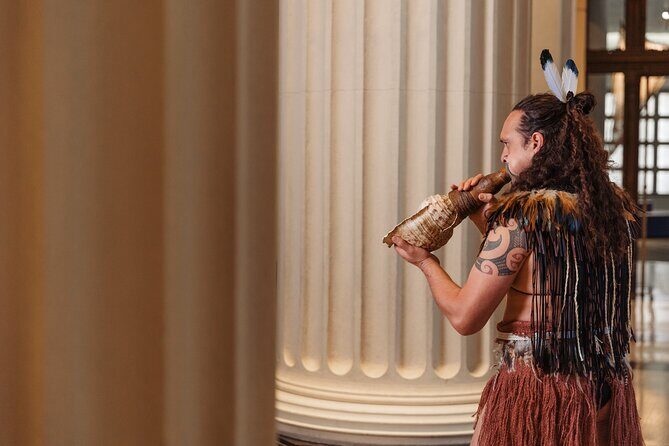
- Living Taonga at Auckland Museum: Māori cultural performance tied to storytelling, waiata, poi, and the meaning behind the haka
- General admission included: you can continue into the museum’s natural history and New Zealand heritage exhibits right after the show
- Haka context, not just performance: you’ll learn about origins, traditional uses, and differences
- Time range is wide (45 minutes to ~3 hours): plan flexible pacing around how your session runs
- Closed galleries warning: the Māori Court & Pacific Galleries are not available right now
- Easy museum location: start and end at Auckland War Memorial Museum in Parnell, near public transportation
Why Auckland Museum is the right stage for Living Taonga
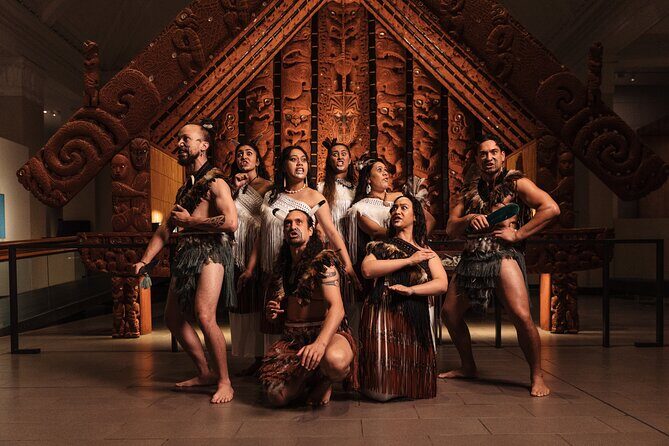
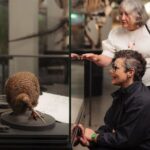
The Auckland War Memorial Museum setting matters. It’s not just a random auditorium inside a mall—this is a museum space that already draws people in to think about New Zealand, identity, and meaning. By placing a Māori cultural performance inside that context, the experience feels like more than entertainment. It’s a way to connect performance arts (songs, movement, spoken storytelling) to the broader museum idea of preserving taonga—treasures that carry cultural value.
If you’re doing Auckland for the first time, this is a smart choice because you get two kinds of learning in one stop. First, you get a live cultural moment: waiata (songs), poi (a traditional performance skill), and explanation from the people presenting it. Then you get the museum’s “walk-up learning”—natural history, New Zealand heritage, and cultural treasures you can study at your own speed.
The other practical win is location. Your start point is the Auckland War Memorial Museum in Parnell, and the activity ends back at the meeting point. That means less scrambling, fewer transfers, and more time on-site.
You can also read our reviews of more museum experiences in Auckland


What the Māori Cultural Performance covers (waiata, poi, and haka)
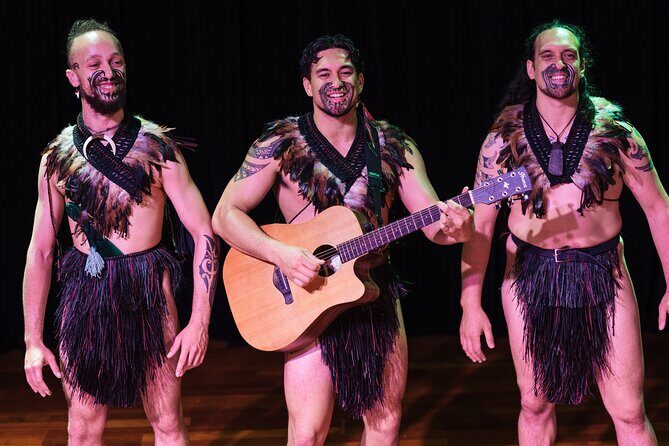
This experience is built around three core elements: song, movement, and meaning.
You’ll hear traditional waiata sung by indigenous artists and orators. It’s not only about sound—songs in Māori culture often carry layers of narrative, identity, and connection. In this performance, the songs are paired with other arts so you don’t just watch from the outside.
Then there’s the poi. Even if you only have a basic sense of what poi is, seeing it performed live is the difference-maker. It shows skill, timing, and control—plus it helps explain how movement can communicate. The program’s structure is designed to make poi feel like part of the culture’s language, not just a trick.
Finally, you’ll get the haka part with context. The experience specifically focuses on the origins and meaning of the world-famous haka, including traditional uses and differences. That’s important because the haka is often reduced to one idea online. Here, the goal is understanding: why it exists, what it communicates, and how it fits into Māori identity and endurance.
A watch-out if you’re expecting a long haka showdown
The duration you see can range from 45 minutes to about 3 hours. That’s a big spread, and it can affect how much time is given to each element. If you’re coming mainly for a major, extended haka performance segment, it’s smart to go in expecting the haka to be included with explanation—not necessarily a full-length, intense sequence the whole time.
How long to plan, and what pacing feels like
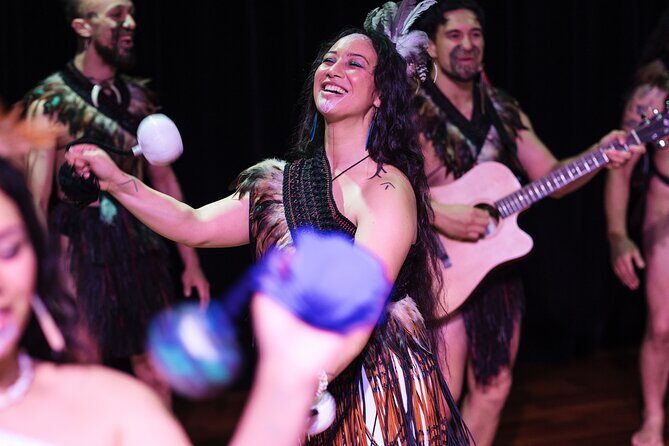
Because the time window is listed as 45 minutes to roughly 3 hours, you should plan your day with flexibility. If you’re tight on schedule, treat this as a “start here, then build outward” plan rather than something you stack neatly between two timed things.
Here’s how I’d pace it:
- Arrive a little early so you can settle without stress.
- Watch the performance straight through, and don’t rush out—this is where you’ll pick up the program’s explanations.
- Afterward, use your included admission to move through exhibits at your own tempo.
The value of that pacing is simple: it turns the museum visit into a coherent arc. Live performance first gives you context. Museum exhibits afterward let you see how cultural treasures and natural history are presented in one place.
Your museum ticket: what you can see after the show
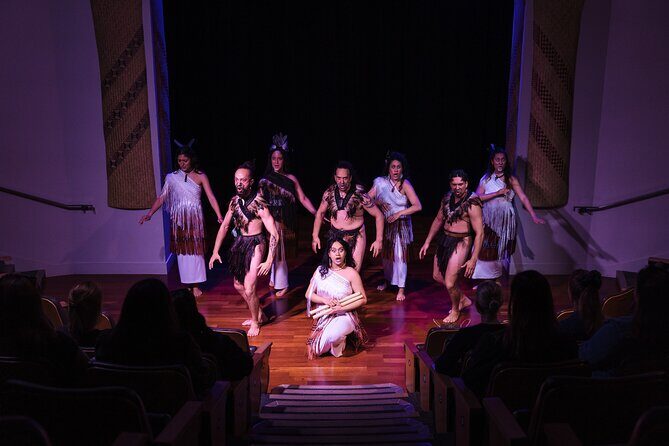
Your ticket includes general admission entry to Auckland Museum. That matters because it changes what you do next. Instead of “only a performance,” you get a full museum option right after.
The museum’s listed focus areas for this admission include:
- Natural history
- New Zealand heritage
- Treasure taonga (cultural treasures)
So if the performance makes you curious about the wider story of Aotearoa New Zealand, the museum gives you an easy next step. You can also slow down and focus on the exhibits that match what the performance made you notice.






What’s not included
Special exhibitions that require separate tickets are not included. That means you should expect that some parts of the museum could still cost extra depending on what’s on display when you arrive. If you’re trying to see everything, you might want to scan for special ticketed areas once you’re on-site.
Closed galleries and how to adjust your expectations

One clear note before you go: the Māori Court & Pacific Galleries are temporarily closed due to essential maintenance. This is the kind of detail that can quietly change the trip.
If part of your plan was to spend a lot of time in those specific galleries, you’ll have to re-route your expectations. In practice, that means:
- Use the time to lean into other parts of the museum that are open.
- Keep your focus on the Living Taonga performance itself as the anchor of your Māori cultural experience.
- When you arrive, check what is open so you can swap in new exhibits without losing your afternoon.
Think of this as adjusting your route, not losing the day. With the cultural performance included, you’re still getting a core experience that’s independent of those closed spaces.
Getting more from the show: respect and smart listening

This is one of those experiences where how you watch changes what you take away.
The show is led by indigenous artists and orators, and it’s built around communication through song, movement, and explanation. That means your attention matters. If you can, give the whole performance your full focus rather than treating it like a quick stop between exhibits.
Also consider language expectations. Some people feel they want more translation for the words in the singing or the haka elements. The experience description emphasizes learning the origins and meaning of the haka, but it doesn’t promise word-for-word translation. So if you’re the type who really wants the exact text and phrasing, do a little preparation before you arrive—basic reading on what haka is meant to communicate can help you catch the “why” even if you don’t understand every word.
And if you want to get value for money, don’t skip the explanation parts. The strongest value here is not just the performance. It’s the bridge between the performance and what it represents.
Price and value: is $38.48 worth it?
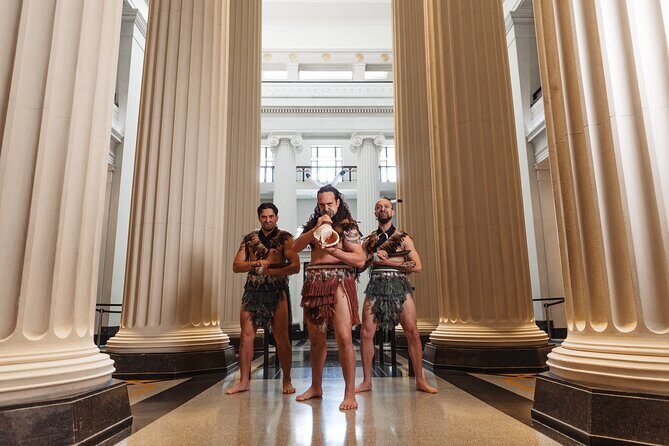
At $38.48 per person, you’re paying for two things at once:
1) a ticket to the Māori Cultural Performance, and
2) general admission entry to Auckland Museum.
That combo is where the value sits. If you were to buy museum admission separately and then add a performance ticket on top, you’d likely end up doing more planning and possibly paying more. The package keeps it simple: one purchase, one day plan, and the museum becomes a built-in extension.
Now, what could affect value for you? Time and expectations. Some sessions feel short. The program is described with a wide duration range, and the haka segment may feel brief compared with what people imagine when they hear haka. If you’re coming with very specific performance expectations—like a long, intense haka sequence—you may feel the “cultural explanation” takes a bigger share of the time than you want.
But if you want a respectful, guided introduction—waiata, poi skill, and haka meaning explained—this ticket price can be a solid bargain. Especially because it helps you avoid a “museum only” trip where you leave Auckland without a strong cultural introduction.
Who this experience suits best
I’d book this if you want:
- a first Māori cultural experience in Auckland that includes context, not just watching
- a plan that combines performance arts and a museum visit without extra ticket juggling
- something structured enough to guide your understanding, but flexible enough afterward to explore the museum at your pace
It also works well if you’re traveling with mixed interests. The performance is culture-first. Then the museum gives everyone a chance to follow their own curiosity through natural history and heritage exhibits.
Where it’s less ideal is if you’re chasing only one thing—like a long haka performance with minimal explanation. The description points to learning the origins and meaning of the haka, so expect education and structure to be part of the deal.
Should you book this Auckland Museum Māori cultural experience?
If you’re in Auckland and you want a meaningful introduction to Māori culture in a museum setting, I think this is a good bet. The value comes from the two-for-one structure: performance plus general admission. You’re not just buying a show—you’re buying an on-ramp to understanding.
My practical recommendation:
- Book it if you want waiata, poi, and haka explained in a cultural context.
- Check your expectations about time and haka length, since the listed duration varies.
- Plan around the fact that the Māori Court & Pacific Galleries are closed, and be ready to enjoy other parts of the museum instead.
For the price, the experience is focused and efficient. You’ll leave with more than photos—you’ll have ideas to carry with you as you move through Auckland Museum.
FAQ
Where does the Māori Cultural Experience start?
It starts at Auckland War Memorial Museum, Parnell, Auckland 1010, New Zealand, and it ends back at the same meeting point.
What is included in the ticket price?
Your ticket includes the Māori Cultural Performance ticket and general admission entry to Auckland Museum.
Does the ticket include special exhibitions?
No. Special exhibition entry for ticketed exhibitions is not included.
How long is the experience?
The experience duration is listed as approximately 45 minutes to 3 hours.
What will I learn about the haka?
The program explains the origins and meaning of the haka, including traditional uses and differences.
Are any museum galleries closed?
Yes. The Māori Court & Pacific Galleries are temporarily closed due to essential maintenance work.
Is free cancellation available?
Yes. You can cancel up to 24 hours in advance for a full refund (with the cut-off based on local time).